At a Glance
- Gentle self-care and habit-building app built around caring for a virtual bird
- Turns small daily goals into encouraging progress rather than a strict productivity score
- Includes goals, reflections, breathing exercises, focus timers and supportive routines
- Core self-care features are available without requiring Finch Plus
- Best suited to people who respond well to warmth, visual rewards and low-pressure encouragement
Introduction
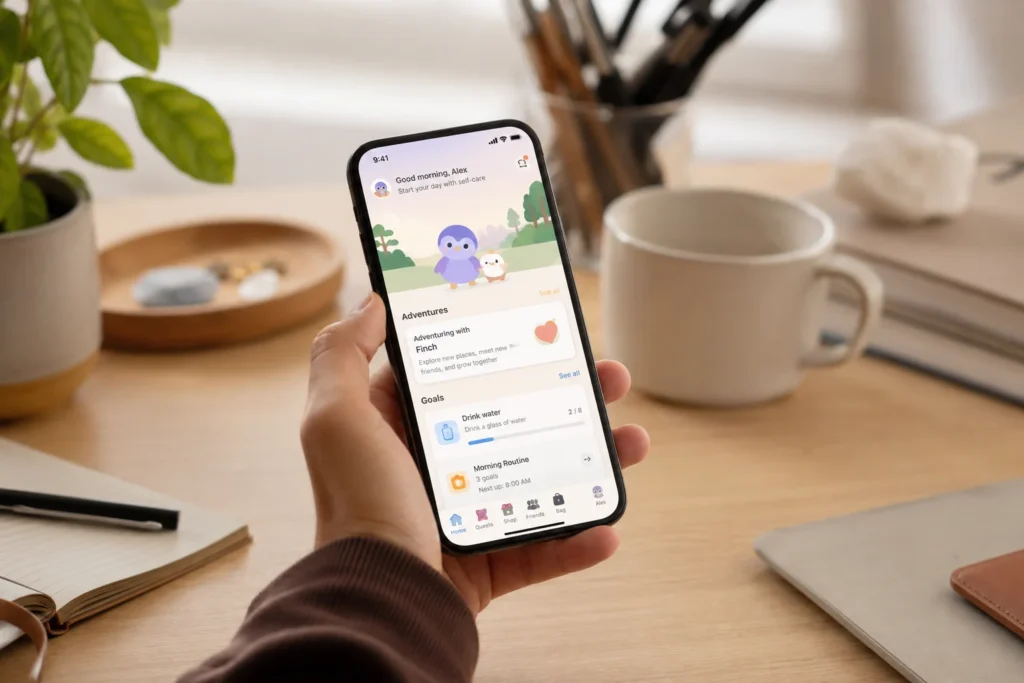
This Finch Review for ADHD looks at whether a friendly self-care app can make everyday habits feel easier to begin and less punishing to maintain. Instead of presenting another formal task manager filled with deadlines, overdue warnings and productivity statistics, Finch gives you a small virtual bird whose progress is connected to the goals you complete.
That approach may sound playful, but it addresses a genuine problem. When brushing your teeth, drinking water, replying to a message or preparing for bed already feels difficult, being shown another list of unfinished responsibilities rarely creates motivation. Finch attempts to soften that experience by turning small actions into moments of care, encouragement and visible progress.
It belongs to a broader group of digital productivity tools for ADHD, although it is noticeably gentler than a traditional planner or habit tracker. The main question is not whether it contains enough features. It is whether the emotional connection, rewards and supportive presentation make you more willing to return when your routine becomes inconsistent. If you are comparing habit trackers specifically, the Best Habit and Routine Apps for ADHD (UK Guide) looks at Finch alongside the other main habit and routine apps covered on SB Neuro Focus.
What Stood Out During Use
The most noticeable part of Finch is the way it changes the emotional tone of completing a routine. Opening an ordinary habit tracker can feel like checking whether you have succeeded or failed. Opening Finch feels more like checking in with a small companion who is pleased that you have returned, even when the only thing you manage is one very basic goal.
That difference matters on low-energy days. A goal such as getting out of bed, stepping outside or taking medication can be entered alongside more conventional tasks without being treated as insignificant. Completing it gives your bird energy and moves the experience forward, which makes the action feel acknowledged rather than swallowed by the rest of the day.
The app also worked best when goals were kept small. Loading it with a long list of ambitious routines makes the home screen busier and recreates the same pressure found in a standard to-do app. With a short selection of realistic actions, however, Finch feels focused enough to guide the day while remaining forgiving when plans change.
Its strongest role is therefore not managing complex projects. Finch works better as a gentle daily check-in that keeps basic routines, wellbeing tasks and small personal commitments visible without turning them into another demanding system.
Who This Guide Is For
This guide is for adults with ADHD who understand what they need to do but struggle to begin consistently, particularly when the task offers little immediate interest or reward. It may also suit people who abandon strict habit trackers after missing a few days because the broken streak starts to feel like evidence that the entire routine has failed.
- Adults who respond positively to games, characters and visual rewards
- People building basic morning, evening or self-care routines
- Users who find conventional productivity apps cold or demanding
- Anyone who benefits from breaking goals into very small actions
- People who want reflection and wellbeing tools alongside habit tracking
It is less appropriate for someone looking for detailed project management, advanced calendar planning or a system for organising a large workload. Finch can support the person doing the work, but it is not designed to replace a complete task manager.
Key Takeaways
- The virtual companion gives small tasks a more immediate emotional reward
- Finch feels supportive rather than heavily performance-focused
- Its value depends on whether the playful presentation keeps you engaged
- Simple routines work better than filling the app with every task in your life
- The free experience includes enough core functionality to test the approach properly
- It complements a planning system more effectively than it replaces one
How Finch Works for ADHD Routines
When you begin using Finch, you create and personalise a virtual bird, often referred to within the app as a birb. Daily goals appear on the home screen, and completing them gives your bird energy to begin an adventure. This provides an immediate response to actions whose real-life benefit might otherwise feel distant or difficult to notice..
Goals can be practical or personal. You might add a repeated reminder to drink water, take a short walk, prepare tomorrow’s clothes or complete a five-minute tidy. They can be scheduled around particular days or times, and related goals can be organised into broader self-care areas when you want more structure.
Alongside the goal list, Finch includes activities such as reflections, breathing exercises, movement prompts, soundscapes and focus timers. These tools give you somewhere to go when the problem is not simply remembering a task. For example, a short breathing exercise may be more useful than another reminder when you feel overstimulated, while a reflection prompt can help untangle why a routine has started slipping.
The reward loop is deliberately straightforward. You complete an action, your bird benefits and the app gives you a small sign that the effort has counted. Optional outfits, room decorations and seasonal activities can add novelty, but the most useful part of the system remains returning, choosing one manageable action and checking it off.
Why It May Help (ADHD Context)
Many ADHD routines fail during the gap between knowing an action matters and feeling enough motivation to start it. The future benefit of drinking more water or preparing for tomorrow may be clear, yet that benefit is often too distant to compete with whatever feels more interesting in the present moment. Finch adds an immediate response by connecting the action to a character you have chosen and developed.
The app may also reduce the shame that can build around inconsistent habits. Rather than presenting self-care as a perfect chain that must never be broken, it encourages the idea that returning still counts. That is useful when one disrupted morning would otherwise become three abandoned weeks.
Resources such as ADDitude regularly discuss ADHD challenges involving motivation, executive function, emotional regulation and routine consistency. Finch is not a treatment for those difficulties, but its combination of visible prompts, smaller actions and immediate encouragement may create enough momentum to make the next step feel more approachable.
There is also a useful element of externalisation. Instead of holding an entire routine in your head, you can place a few essential actions somewhere visible and return to them throughout the day. For people who benefit from reminders beyond their phone, wearable prompts from the ADHD productivity tools guide may provide an additional layer of support without requiring Finch itself to become a complex planning system.
Real-World Use Cases
A morning routine is one of the clearest uses. Rather than creating a demanding sequence of fifteen perfectly timed actions, you could begin with taking medication, opening the curtains, drinking something and checking what needs to leave the house with you. Each action is small enough to complete without much planning, while the app provides a visible sense that the morning is moving forward.
Finch also fits naturally into an evening reset. Goals such as putting your keys in one place, preparing clothes, charging important devices and completing a basic hygiene task can reduce the amount of thinking required the following morning. Because the rewards appear immediately, these quiet preparation tasks feel less invisible.
On a difficult day, the app can be reduced to survival-level actions without making the routine feel pointless. Eating something, standing outside for two minutes or sending one necessary message may become the full plan. Finch handles that kind of adjustment better than systems built mainly around output, because the goal is to maintain a supportive check-in rather than prove how productive the day has been.
It can also work as a bridge into focused work. You might include a goal to open the document, work for five minutes or complete one focus timer before deciding whether to continue. The app does not manage the project itself, but it can make the entry point clearer when beginning feels harder than the actual task.
Feature Breakdown Table
| Feature | What It Does | Why It May Matter for ADHD |
|---|---|---|
| Daily goals | Places small repeated actions on the home screen | Reduces the need to remember routines mentally |
| Virtual companion | Connects completed goals to the growth and experiences of your bird | Adds immediate emotional reward to low-interest tasks |
| Reflections | Provides space to record thoughts and respond to prompts | May help identify patterns behind avoided or disrupted routines |
| Breathing and movement activities | Offers guided wellbeing exercises within the app | Provides a practical response when stress or restlessness blocks progress |
| Focus timers | Creates a defined period for working on one activity | Can make vague tasks feel smaller and easier to enter |
| Friends and encouragement | Allows supportive interactions and selected goal accountability | Adds gentle social motivation without requiring public competition |
| Customisation and rewards | Unlocks clothing, room items and other visual progress markers | Keeps repeated routines more novel and personally engaging |
Focus Environment Fit
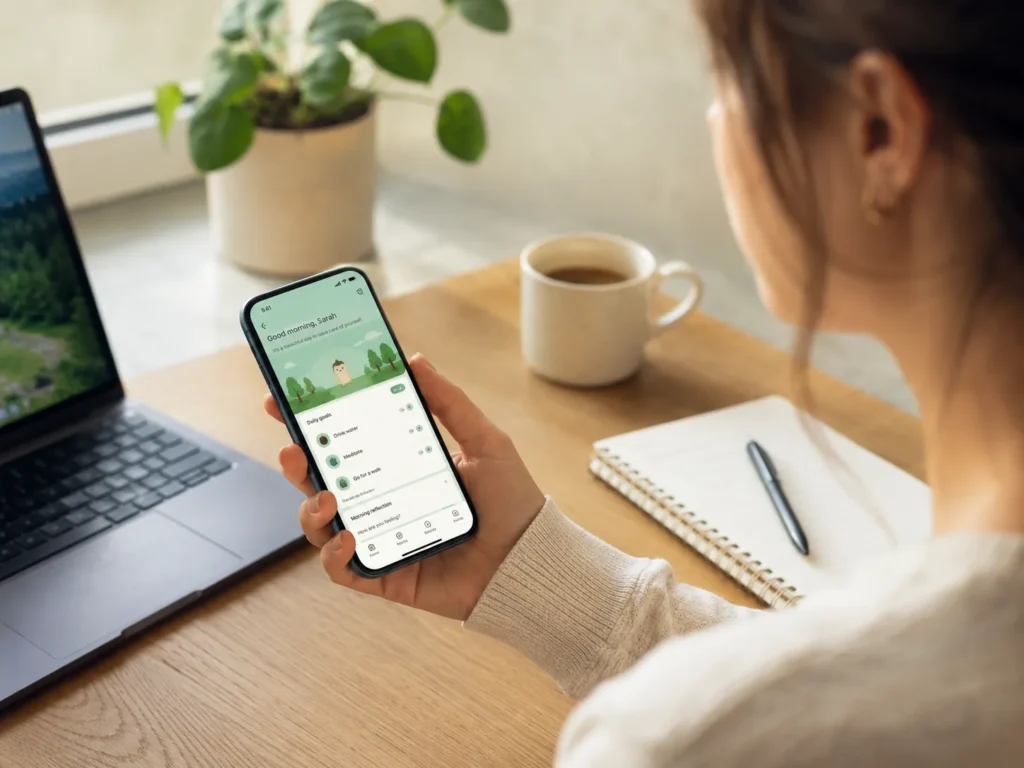
Finch suits an environment where your phone is already part of the routine but a conventional task app feels too formal or demanding. Its illustrations, character animations and friendly language can make checking in feel less like reviewing unfinished work, particularly during a difficult morning or an evening wind-down.
The obvious drawback is that it still lives on a smartphone. Opening the app creates an opportunity to notice notifications, messages or more stimulating apps before you complete the intended check-in. Keeping Finch on the first home screen, using its widget and limiting unrelated notifications may make the routine easier to protect.
The experience can also become visually busy as more goals, rewards and activities are added. A smaller setup is usually easier to maintain. Choosing several high-value goals gives the bird enough interaction to remain motivating without turning every visit into a lengthy session.
Friction Points to Consider
- The playful bird theme will not appeal to everyone
- Adding too many goals can make the app feel cluttered and demanding
- Rewards and customisation may become a distraction from the original routine
- It does not provide the depth needed for complex projects or detailed planning
- Some additional content and customisation options sit within Finch Plus
- Using a phone-based habit tool still exposes you to other phone distractions
Real Use Review
Finch was most useful when a routine would normally disappear because there was no immediate reason to complete it. The app gives a small action a visible outcome, while the connection with the bird can make returning feel less uncomfortable than reopening an abandoned checklist.
The experience works particularly well when the goals reflect genuine friction. Adding “drink water” may be worthwhile when you regularly forget, but adding it simply because it sounds like a healthy habit creates another box with little personal meaning. Finch is easier to maintain when each goal addresses a real point of friction in the day.
Its tone is another strength. The app generally avoids making missed actions feel like a formal failure, and that can make it easier to return after a disrupted week. You still need to open it and engage with the routine, but the emotional cost of coming back is lower than it can be with an app dominated by broken streaks and overdue tasks.
The main limitation is that Finch can become an activity in itself. Browsing rewards, changing outfits and interacting with extra features may feel productive without moving the original goal forward. Used with a clear boundary, those elements provide motivation. Used without one, they can become another pleasant form of avoidance.
A more sustainable setup is therefore a modest one: several essential routines, one or two optional wellbeing actions and a brief daily check-in. This leaves enough room for the bird to provide encouragement without turning the app into another system that needs regular maintenance.
Practical Reality Check
Finch does not remove executive dysfunction, and caring about the virtual bird will not automatically make every task possible. On days when energy is extremely low, even opening a supportive app can feel like an extra step. The value comes from whether the character, reminders and rewards reduce that step enough for you to begin more often.
It is also worth separating self-care from full productivity management. Finch can remind you to start an important task or complete a short focus session, but it is not the best place to map a complicated work project. Trying to force everything into it may weaken the calm simplicity that makes the app useful in the first place.
A realistic measure of success would be whether Finch helps you complete two or three valuable actions more consistently, not whether it creates a flawless lifestyle. If taking medication, preparing for bed or beginning one avoided task becomes easier, the app may already be performing a worthwhile role.
Before You Commit
Start with the free experience and keep the first routine deliberately small. Choose three to five actions that regularly cause difficulty, then use the app long enough to see whether the bird creates genuine motivation after the novelty of the first few days begins to settle.
Consider the type of encouragement you naturally respond to as well. Someone who enjoys characters, nurturing games and gentle visual progress may build a strong connection with Finch. Someone who prefers plain lists, statistics or direct instructions may find the presentation distracting rather than supportive.
It is also sensible to decide what Finch will not contain. Keeping complex work projects, appointments and detailed planning in their appropriate systems prevents the app from becoming overloaded. Finch can then remain the place for small routines, personal wellbeing and the actions that support everything else.
Frequently Asked Questions
Is Finch good for adults with ADHD?
Finch may suit adults with ADHD who benefit from immediate rewards, visual progress and a less judgemental approach to habit building. It is particularly relevant when simple self-care tasks are easy to forget or difficult to begin.
Is Finch a productivity app?
It supports productivity indirectly, but it is primarily a self-care and habit-building app. It can help you begin work, maintain routines and complete small goals, although it is not designed for managing complex projects.
Can Finch be used for free?
The core experience includes daily goals, care for your bird, reflections, social encouragement and seasonal activities. Finch Plus is optional and adds more content and customisation rather than replacing the basic self-care system.
Does Finch include reminders?
Goals can be organised around repeated routines and notifications, allowing the app to prompt actions at useful points in the day. Keeping the number of reminders limited may prevent them from becoming background noise.
Can Finch replace a habit tracker?
It can replace a basic tracker when the main goal is gentle consistency. People who need detailed statistics, advanced charts or highly structured performance tracking may prefer a more conventional alternative.
What happens when you miss a day?
Missing a day does not remove the value of returning. Finch is best approached as a continuing check-in rather than a perfect streak that loses meaning after one interruption.
Alternatives to Consider
If stronger game mechanics, character progression and shared challenges help create motivation, Habitica Review for ADHD (UK Guide) explores a more reward-driven approach to completing habits and daily tasks. Habitica feels more like turning everyday responsibilities into a role-playing game, whereas Finch keeps the focus on supportive self-care and emotional encouragement.
For Apple users who prefer a cleaner and more direct habit-tracking experience, Streaks Review for ADHD (UK Guide) looks at an app built around completing a defined set of habits and keeping consistency visible. It removes the virtual companion and emotional check-ins, making it a simpler option for people who want straightforward progress tracking.
Android users who want a free and uncomplicated way to record habits may prefer Loop Habit Tracker Review for ADHD (UK Guide). It does not include characters, social features or a large reward system, so it feels less emotionally engaging than Finch, but its neutral design may make it easier to use as a focused tracking tool.
If the main difficulty is moving through a timed sequence of actions, Routinery Review for ADHD (UK Guide) covers an app designed to guide users through each step of a morning, evening or work routine. Rather than encouraging separate self-care goals, Routinery focuses on helping you start the next action and continue through the routine in order.
Final Verdict
Finch is best suited to people who need everyday routines to feel smaller, less judgemental and more immediately rewarding. The virtual bird gives basic self-care actions a visible emotional response, while the reflections, timers and wellbeing exercises provide support when the difficulty involves more than simply remembering a task.
Finch will not replace a detailed planner, calendar or project-management tool, and the playful presentation may feel too decorative for some users. There is also a risk that rewards and customisation become more interesting than the habits they are meant to support. With a short, purposeful goal list, however, the app can provide enough structure to keep routines visible without making an inconsistent day feel like complete failure.
For adults who repeatedly abandon rigid habit trackers after an inconsistent week, Finch offers a more welcoming reason to return. Its greatest strength is not making you perfectly productive. It is making one useful action feel achievable enough to begin.
Build a Simple ADHD Productivity System
If you want to bring everything together into one clear setup, this guide shows how tools, apps, and routines can work as one system.