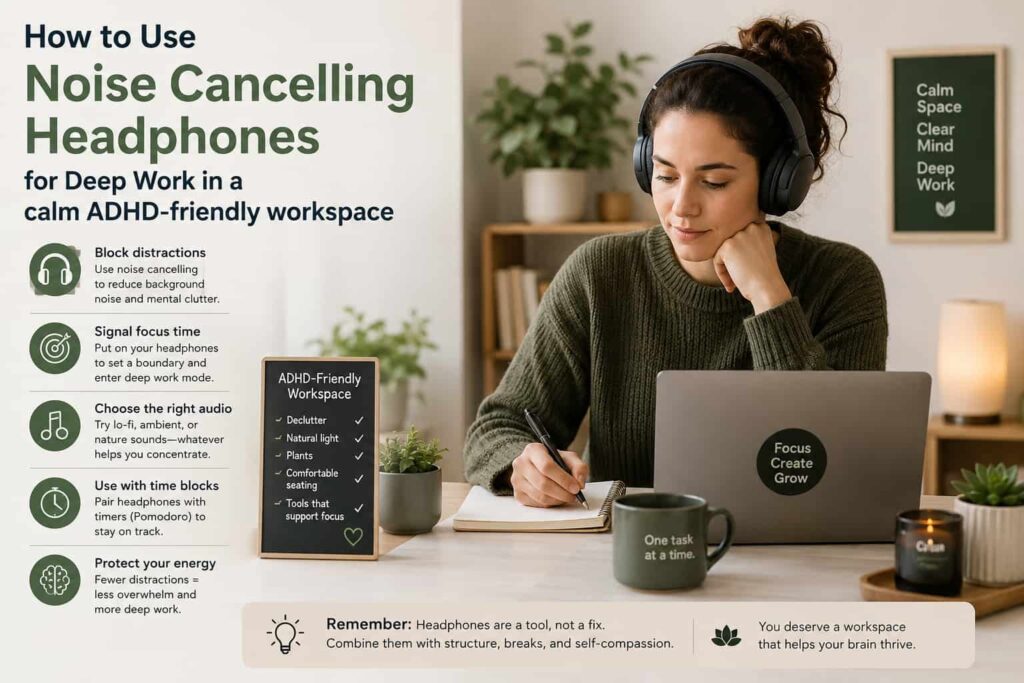
How to Use Noise Cancelling Headphones for Deep Work: Quick Overview
-
- Choose one clear work task before putting headphones on
- Use noise cancelling as a focus cue, not just a sound blocker
- Pair headphones with a timer, reminder system, or written task list
- Keep the setup simple so it does not become another distraction
- Use breaks to avoid fatigue, pressure, or sensory overload
Introduction
Learning how to use Noise Cancelling Headphones for Deep Work is not really about buying headphones and hoping they fix focus. It is about using them as part of a simple ADHD-friendly setup that reduces background noise, lowers decision-making, and helps your brain understand that it is time to stay with one task. If you are building a wider setup, this can sit alongside your ADHD productivity tools UK system rather than being treated as a standalone solution.
For many people with ADHD, deep work is difficult because attention gets pulled by sound, movement, notifications, open tabs, and unfinished thoughts. Noise-cancelling headphones can help create a boundary, but they usually work best when they are combined with structure.
Why ADHD Productivity Systems Matter
Deep work can feel hard with ADHD because distractions are not always obvious. A door closing, a phone lighting up, someone talking in another room, or even the feeling that you have forgotten something can be enough to break momentum.
This is why a system matters. A system gives your brain fewer things to decide in the moment. Instead of asking, “How do I focus today?”, you follow a simple routine: choose the task, put headphones on, start the timer, remove obvious distractions, and begin.
I find this is where headphones can become more useful than expected. They are not just blocking sound. They become a physical signal that says, “This is the work block now.”
Resources such as ADDitude often discuss ADHD challenges around focus, routines, and distraction. Noise cancelling does not remove those challenges, but it can support a calmer environment when used realistically.
The Core Components of an ADHD Productivity System
- Focus tools
- Reminder systems
- Environment control
- Routine structure
Noise-cancelling headphones mainly support environment control. They reduce the amount of background sound your brain has to filter. But on their own, they do not tell you what to work on, when to stop, or how to return after a break.
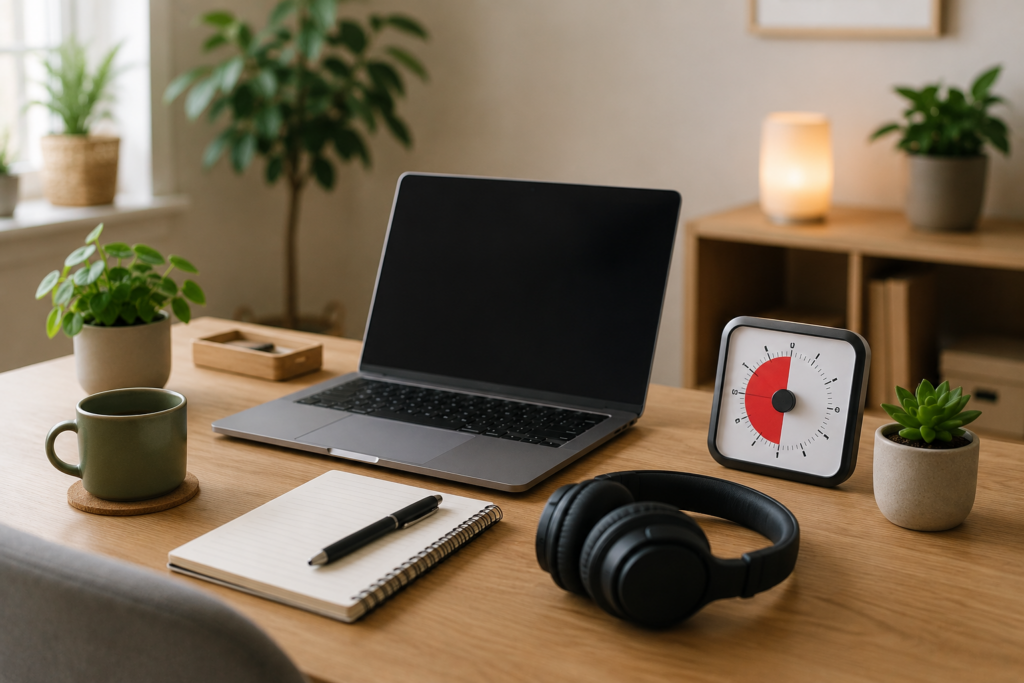
That is why they work better when paired with simple focus tools. A timer can create a clear work block. A smartwatch reminder can bring you back without needing to check your phone. A tablet or written plan can hold the task so you are not trying to keep everything in your head.
How Different Tools Work Together
How to Use Noise Cancelling Headphones for Deep Work becomes much easier when you think in layers. The headphones reduce sound. The timer creates a time boundary. The task list gives you one clear target. The reminder system helps you transition when the block ends.
For example, you might use noise-cancelling headphones alongside a visual timer if time tends to disappear once you start working. If that sounds familiar, this guide on how to use a visual timer for ADHD focus can help you build a stronger work block.
You can also connect your headphones setup to a broader workspace. If your main problem is background noise, interruptions, and scattered tools, the best workspace and desk setup for ADHD UK guide can help you think about the environment around the headphones as well.
Example ADHD Productivity Setup
Morning Setup
Start by choosing one task that matters most. This should be specific, not vague. “Write the introduction” is better than “work on article.” Before putting your headphones on, close anything you do not need and place your phone away from your main workspace.
Work Blocks
Put your noise-cancelling headphones on before starting the work block. This helps create a clearer mental switch into focus mode. Then start a timer for a manageable session, such as 20, 25, or 30 minutes. During that time, the aim is not perfect focus. The aim is simply to keep returning to the same task.
Break Management
When the timer ends, take the headphones off if that helps your brain recognise the change. This creates a clearer boundary between focus time and break time. Use the break to move, drink water, stretch, or step away from the screen.
End of Day Reset
At the end of the day, reset the workspace so the next session is easier to start. Put the headphones back where you can see them, write down the first task for tomorrow, and clear anything that might create friction in the morning.
If you are still figuring out which headphones may fit your routine best, this guide to the best noise-cancelling headphones for ADHD adults in the UK compares different options for comfort, budget, and everyday use.
Common Mistakes to Avoid
- Using headphones without deciding what task you are starting
- Keeping your phone next to you and checking it during the work block
- Expecting noise cancelling to fix poor sleep, stress, or overload
Another common mistake is using headphones all day without breaks. That can become tiring, especially if you are sensitive to pressure, silence, or sensory changes. It is usually better to use them for focused blocks rather than as a permanent fix.
Building a Simple System That You Can Stick To
The best system is the one you can actually repeat. You do not need a complicated routine with five apps, three timers, and a perfect desk setup. Start with a simple pattern.
Choose the task. Put the headphones on. Start the timer. Work until the timer ends. Take a short break. Write down what comes next.
That may sound basic, but basic is often what works. ADHD systems usually fail when they become too heavy to maintain. Noise-cancelling headphones can be useful because they are easy to understand and quick to use. The key is making them part of a repeatable routine.
If you want to understand when they help and when they may not, read why noise cancelling helps ADHD focus before relying on them as your only focus tool.
Frequently Asked Questions
Are noise-cancelling headphones good for ADHD deep work?
They can be useful for ADHD deep work if background noise is one of the things pulling your attention away. They are usually most effective when combined with a clear task, timer, and simple routine.
Should I use music, white noise, or silence?
It depends on what feels least distracting. Some people work best with quiet instrumental music, some prefer brown noise or white noise, and others need silence. The safest starting point is to choose one sound option and keep it consistent for a few sessions.
For deep work, I usually use music without lyrics so I do not end up focusing on the words themselves. Lyrics can sometimes become a launchpad for distraction, so I tend to use lo-fi or coding playlists instead.
How long should I wear noise-cancelling headphones for focus?
Start with short work blocks of around 20 to 30 minutes. This helps you test whether they improve focus without creating pressure, fatigue, or discomfort.
Can headphones replace other ADHD productivity tools?
No. Headphones can support focus, but they do not replace planning, reminders, timers, breaks, or realistic routines. They work best as one layer of a wider system.
What if noise cancelling feels uncomfortable?
If the pressure or silence feels uncomfortable, try a lower noise-cancelling mode, different background sound, shorter sessions, or earbuds instead of over-ear headphones.
Final Thoughts
How to Use Noise Cancelling Headphones for Deep Work comes down to using them as a cue, not a cure. They can reduce background noise, create a clearer work boundary, and make it easier to settle into one task, but they work best when the rest of the system is simple.
For ADHD focus, the goal is not to build a perfect routine. It is to make starting easier, reduce avoidable distractions, and create a setup that you can repeat on normal days, not just highly motivated ones.
Build a Simple ADHD Productivity System
If you want to bring everything together into one clear setup, this guide shows how tools, apps, and routines can work as one system.