
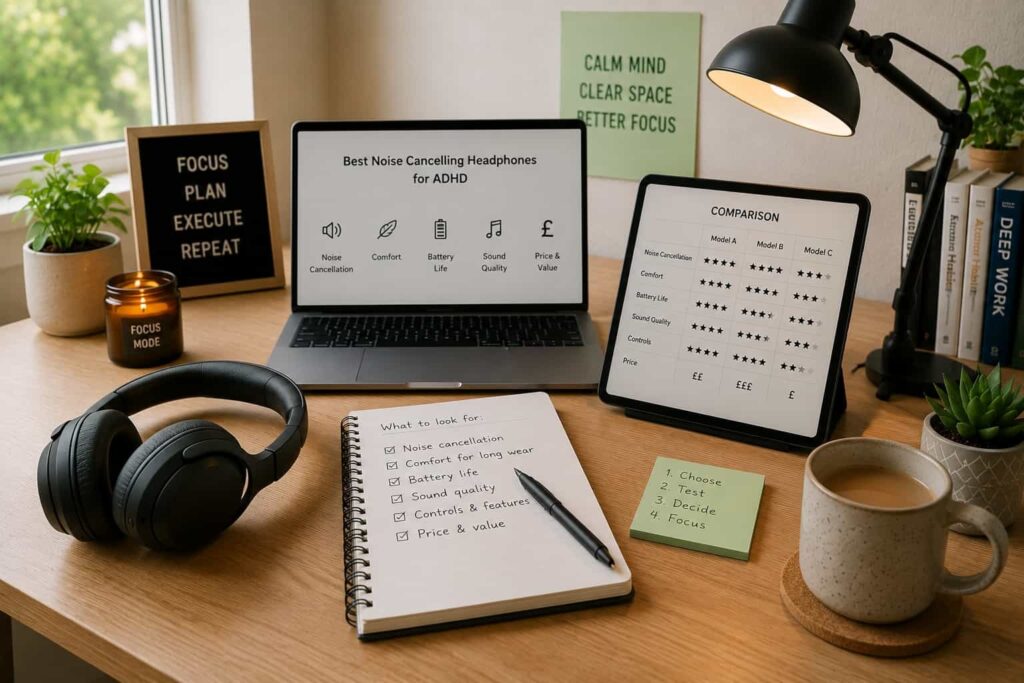
How to Choose the Best Noise Cancelling Headphones for ADHD: Quick Overview
-
- Choose comfort before features if you plan to wear them for long work sessions
- Look for strong noise cancelling if sound easily pulls your attention away
- Think about whether over-ear headphones or earbuds fit your routine better
- Use headphones as part of a wider focus system, not as a standalone fix
- Pick the option you will actually use consistently
Introduction
This guide on How to Choose the Best Noise Cancelling Headphones for ADHD is really about finding a tool that reduces background noise without adding another thing to manage. If you are building a wider setup, it can help to think about headphones alongside your full ADHD productivity tools system rather than treating them as a magic fix on their own.
For some people, noise cancelling headphones create a clear boundary between work and distraction. For others, they can feel too heavy, too isolating, or difficult to use all day. The best choice is usually the one that fits naturally into your work pattern, sensory needs, and home or office environment.
Why ADHD Productivity Systems Matter
ADHD focus can be affected by sound, movement, notifications, clutter, interruptions, and the effort needed to restart after being distracted. Noise cancelling headphones can help with one part of that problem, but they work best when they are part of a simple system.
I find this is where a lot of tools either succeed or fail. A pair of headphones can be excellent, but if they are uncomfortable, hidden in a drawer, or only used once a week, they will not support focus in a reliable way.
Resources such as ADDitude often discuss ADHD challenges such as distraction, routines, and executive function. A practical tool system does not remove ADHD, but it can reduce some of the friction around starting and staying with tasks.
The Core Components of an ADHD Productivity System
- Focus tools such as noise cancelling headphones, timers, and distraction blockers
- Reminder systems such as smartwatches, calendar alerts, or visual prompts
- Environment control such as desk layout, lighting, sound reduction, and fewer visible distractions
- Routine structure such as morning setup, work blocks, breaks, and an end-of-day reset
How Different Tools Work Together
Choosing noise-cancelling headphones becomes easier when you stop looking for the “best” option overall and start thinking about what you actually need them to help with.
For some people, the main benefit is blocking background noise. For others, it is creating a clearer boundary between distractions and focused work. They often work best alongside simple tools like a timer for work sessions or reminders that help with transitions between tasks. If you work from home, they can also become part of a wider ADHD-friendly workspace setup.
The goal is not to build a complicated productivity system. It is to make focus feel easier by reducing friction and cutting down the number of decisions you need to make during the day.
Example ADHD Productivity Setup
Morning Setup
Start by choosing one work area and placing your headphones somewhere visible. If they are kept in a case, bag, or drawer, they are easier to forget. A simple morning cue could be putting them beside your laptop before starting work.
Work Blocks
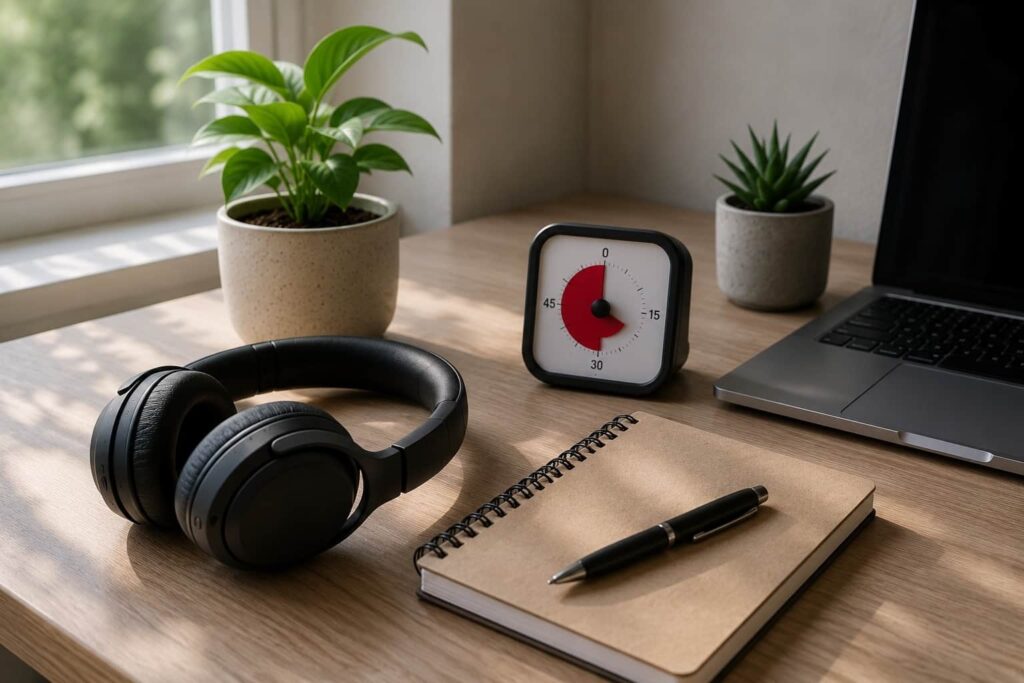
Use the headphones at the start of a focused work block, not halfway through when you are already distracted. You might pair them with a visual timer or a short task list so your brain knows what the session is for.
Break Management
Breaks matter because headphones can sometimes make it easier to overfocus. A timer, smartwatch reminder, or calendar prompt can help you pause before the session turns into mental fatigue.
End of Day Reset
At the end of the day, put the headphones back in the same place and charge them if needed. This small reset makes them easier to use tomorrow without adding another decision.
Common Mistakes to Avoid
- Choosing headphones only because they have the strongest noise cancelling, without checking comfort
- Using headphones without a clear work block, timer, or task focus
- Buying a premium model when a simpler option would fit your routine better
- Ignoring whether over-ear headphones feel too warm, heavy, or isolating
- Keeping the headphones out of sight so they never become part of the routine
Building a Simple System That You Can Stick To
How to Choose the Best Noise Cancelling Headphones for ADHD should come down to real use. Ask yourself where you will wear them, how long you will wear them for, and what problem they are solving.
If your main issue is background noise, stronger active noise cancelling may matter most. If your issue is discomfort, lighter headphones or earbuds may be better. If your issue is starting work, headphones may need to be paired with a timer, planner, or distraction blocker.
If you are still deciding where headphones fit into your setup, the main roundup on noise-cancelling headphones for ADHD adults in the UK can help compare options more directly.
Frequently Asked Questions
Are noise cancelling headphones good for ADHD?
They can be helpful if sound is one of your main distractions. They are not a cure for ADHD, but they can make the environment feel calmer and easier to work in.
Are over-ear headphones better than earbuds for ADHD?
Over-ear headphones often create a stronger sense of separation, while earbuds can feel lighter and easier to wear. The better option depends on comfort, sensory preference, and how you work.
Should I choose the strongest noise cancelling available?
Not always. Strong noise cancelling is useful, but comfort, battery life, fit, and ease of use matter just as much if you want to use them consistently.
Can headphones help with deep work?
Yes, especially when they are used at the start of a planned work block. They work better when paired with one clear task and a simple time structure.
Do I need expensive headphones?
No. Premium models may offer better noise cancelling and comfort, but the best choice is the one that suits your routine and gets used regularly.
Final Thoughts
Choosing noise-cancelling headphones for ADHD is usually less about finding the most expensive or feature-packed model and more about finding something that fits naturally into your routine. The right pair should feel comfortable to wear, reduce background distractions, and help you settle into work without becoming another thing to manage.
For many people, the most effective setup is also the simplest. Headphones can help create a quieter environment, a timer can add structure to work sessions, and reminders can help with transitions between tasks. When those tools work together in a way that feels easy to repeat, staying focused often becomes more manageable.
Build a Simple ADHD Productivity System
If you want to bring everything together into one clear setup, this guide shows how tools, apps, and routines can work as one system.