
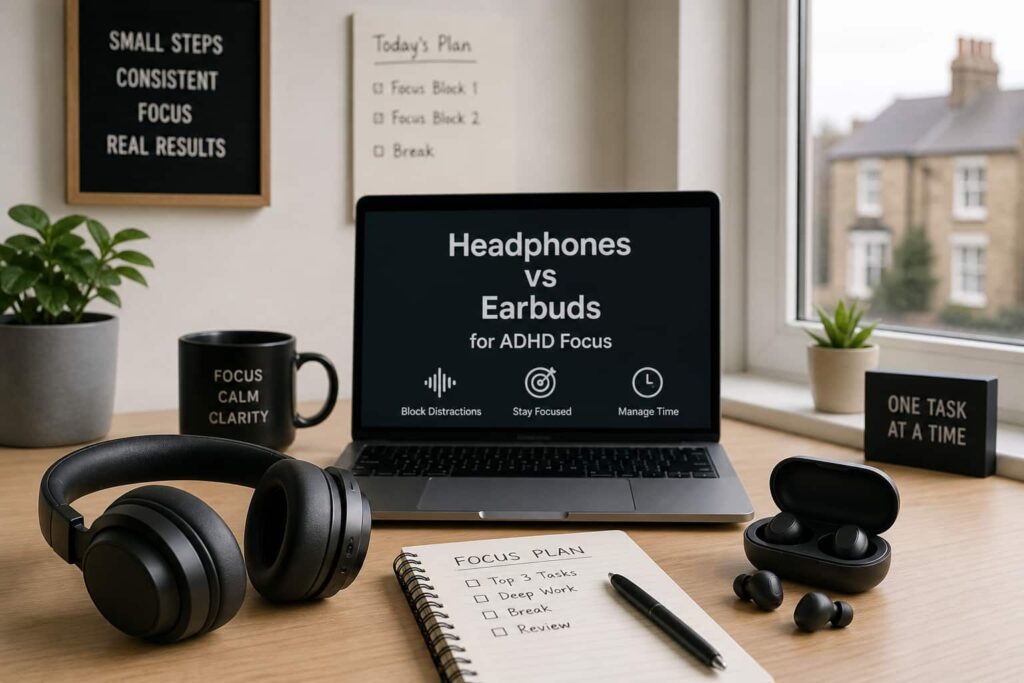
Headphones vs Earbuds for ADHD Focus: Quick Overview
- Headphones usually give stronger noise reduction and a more obvious “focus mode” feeling.
- Earbuds are lighter, easier to carry, and more discreet for travel or shared spaces.
- For deep work, over-ear headphones are often the better choice.
- For short tasks, commuting, or moving around, earbuds may be more practical.
- The best option depends on comfort, sensory preferences, battery life, and how easily you get distracted.
Introduction
Choosing between headphones and earbuds for ADHD focus is less about which one is technically “better” and more about which one helps you settle into work with fewer distractions and less friction.
For some people, large noise-cancelling headphones create a stronger sense of separation from background noise and make it easier to stay with one task. For others, earbuds feel lighter, less overwhelming, and easier to wear throughout the day without constantly noticing them.
If you are building a wider productivity setup, audio tools work best as part of a simple system rather than a standalone fix. The right option is usually the one that fits naturally into your routine and actually gets used consistently.
I find this choice matters more than it first sounds. If a tool feels uncomfortable, awkward, or too much effort, it tends to disappear into a drawer no matter how good it looks on paper.
Why ADHD Productivity Systems Matter
ADHD focus is rarely improved by one tool alone. A pair of headphones or earbuds can help with noise, but they work best when they are part of a simple system: a clear task, a calmer environment, a realistic time block, and fewer distractions competing for attention.
That is why the question is not just “Which sounds better?” It is “Which option makes it easier for me to start, stay with the task, and avoid drifting?”
Resources such as ADDitude often discuss common ADHD challenges around attention, routines, and distraction. Audio tools can support those areas, but they should be used as practical supports rather than medical solutions.
The Core Components of an ADHD Productivity System
- Focus tools
- Reminder systems
- Environment control
- Routine structure
Headphones and earbuds mainly sit in the environment control part of the system. They help reduce unwanted sound, create a focus cue, and make a task feel more contained.
If noise is one of your biggest problems, it is worth reading why noise cancelling helps ADHD focus, because the benefit is often less about silence and more about reducing the number of things your brain has to filter.
How Different Tools Work Together
Headphones and earbuds work best when they are paired with one clear job. For example, headphones might signal a deep work block, while earbuds might support light admin, walking, commuting, or tidying.
If your main issue is environmental noise, the best noise-cancelling headphones for ADHD adults in the UK guide is the most relevant next step because it compares options designed for focus-friendly listening.
For a stronger setup, you might combine headphones with a timer, a written task list, or a distraction blocker. The audio tool creates the calm space; the rest of the system tells you what to do inside that space.
Example ADHD Productivity Setup
Morning Setup
Use earbuds if you are moving around, getting ready, or doing light planning. They are easier to wear while walking, making coffee, or setting up your day.
Work Blocks
Use over-ear headphones for deeper work sessions where background noise, conversations, or household sounds keep pulling your attention away.
Break Management
Take the headphones off during breaks so your brain gets a clear signal that the focus block has ended. This small physical reset can help stop work and rest from blurring together.
End of Day Reset
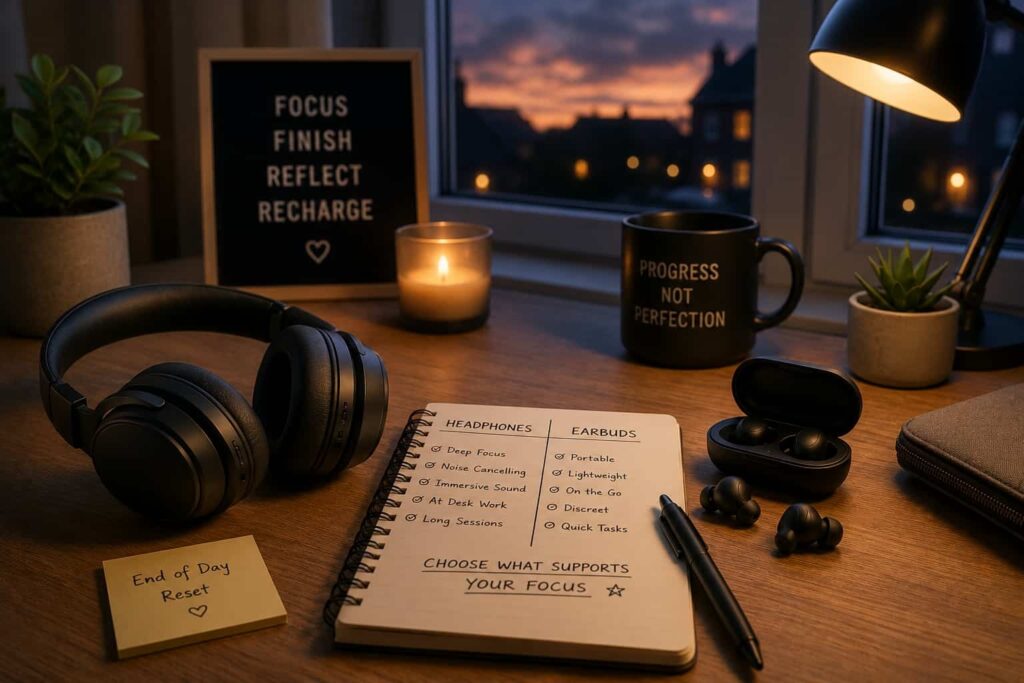
Use earbuds for a lower-pressure reset, such as clearing your desk, reviewing tomorrow’s tasks, or listening to calm audio while tidying up.
Common Mistakes to Avoid
- Buying the strongest noise cancelling without checking comfort first.
- Using headphones all day without breaks, then feeling overstimulated by the end.
- Expecting audio tools to fix unclear tasks or unrealistic routines.
Another common mistake is choosing based only on reviews. A product can be excellent and still not suit your sensory preferences, head shape, ear comfort, or working style.
Building a Simple System That You Can Stick To
The easiest way to choose is to match the tool to the situation. Use headphones when you need a strong focus boundary. Use earbuds when you need flexibility, movement, or something less noticeable.
| Situation | Better Fit | Why It Helps |
|---|---|---|
| Deep work at a desk | Headphones | Stronger sound isolation and clearer focus cue |
| Commuting or walking | Earbuds | Portable, light, and easier to use on the move |
| Shared office or home noise | Headphones | More effective for reducing background sound |
| Quick admin tasks | Earbuds | Simple to put in and remove without feeling locked in |
| Sensory sensitivity around ears | Depends | Some prefer over-ear pressure, while others prefer lighter earbuds |
If you want a strong over-ear option, the Sony WH-1000XM5 review for ADHD focus is worth comparing with a more budget-friendly option like the Soundcore Life Q30 review for ADHD focus.
Frequently Asked Questions
Are headphones or earbuds better for ADHD focus?
Headphones are usually better for deeper focus because they block more sound and create a stronger boundary. Earbuds are often better for lighter tasks, movement, and everyday convenience.
Are noise-cancelling headphones worth it for ADHD?
They can be worth it if background noise is one of your biggest focus problems. They are not a cure for ADHD, but they can make your environment feel easier to manage.
Are earbuds less distracting than headphones?
They can be, especially if you dislike the pressure or size of over-ear headphones. However, some earbuds are easier to lose, fiddle with, or forget to charge.
Can I use normal headphones for ADHD focus?
Yes. You do not always need premium active noise cancelling. Comfortable headphones with steady music, white noise, or ambient sound may be enough for some tasks.
What is the best choice for working from home?
For working from home, headphones are usually the stronger option if you deal with household noise, conversations, or unpredictable distractions.
Final Thoughts
Headphones vs Earbuds for ADHD Focus comes down to how you actually work. Headphones are usually better for deep focus, noise reduction, and creating a clear work boundary. Earbuds are better for portability, quick tasks, and lower-pressure use throughout the day.
If you can, treat them as different tools rather than direct rivals. Headphones can be your “focus block” tool. Earbuds can be your “keep moving” tool. That simple split often works better than trying to force one option to do everything.
Build a Simple ADHD Productivity System
If you want to bring everything together into one clear setup, this guide shows how tools, apps, and routines can work as one system.