
Quick Answer
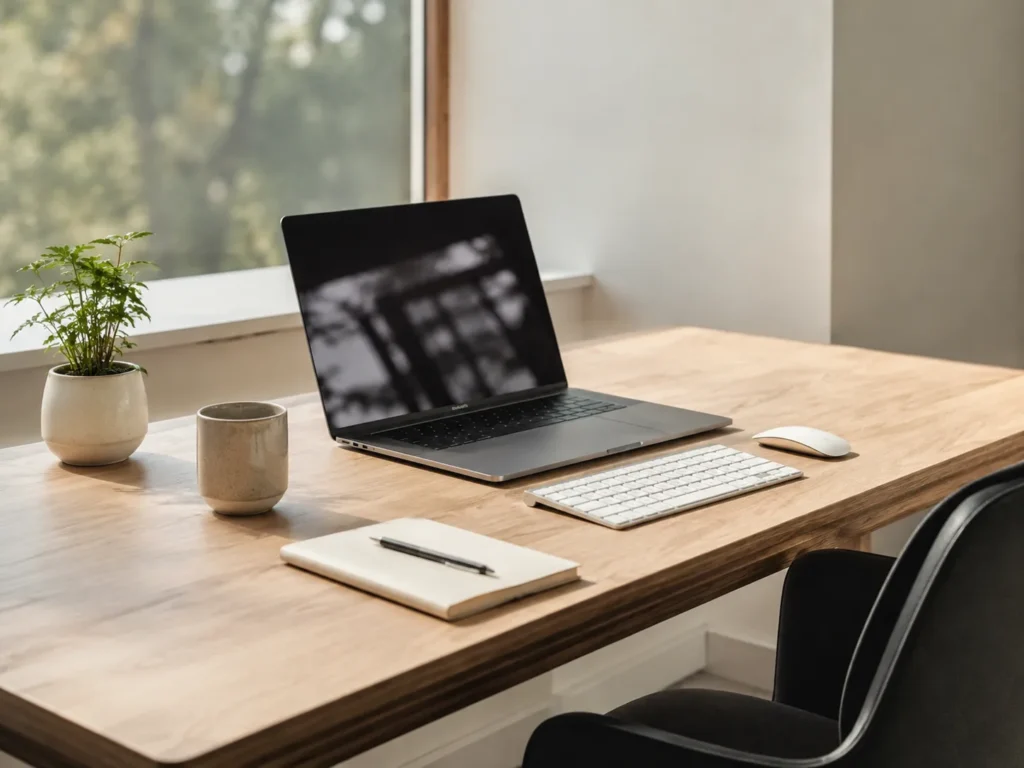
A minimalist ADHD desk works well when it keeps necessary items visible without leaving every possible task competing for attention. A useful setup feels calm and easy to return to, while still providing obvious places for the things needed during an ordinary working day.
Introduction
A minimalist desk for an adult with ADHD does not need to be a spotless surface holding a laptop, one expensive lamp and nothing else. For someone with ADHD, removing too much can make useful items disappear from memory, whereas leaving everything visible can make it difficult to work out where to begin. The practical middle ground is a desk that shows what matters now while giving everything else a nearby home. The wider ADHD Productivity Tools UK Guide explores how this kind of physical setup can work alongside apps, routines and other everyday support.
A desk often becomes cluttered gradually. A letter is left there because it needs a reply, a cable remains out because it may be needed later, and a notebook stays open to stop an important thought being forgotten. None of those decisions is unreasonable, but together they create a surface covered with unfinished reminders. Every time you sit down, your attention has several possible directions to travel before the intended task has even started.
A more minimal setup can make that moment feel less demanding, provided it is built around how you genuinely work. It needs enough structure to prevent piles from spreading, but not so much organisation that putting something away becomes a project in itself.
Minimalist Desk Setups for ADHD Adults: Key Causes
Desk clutter is rarely caused by simply not caring about tidiness. It often develops because the desk is being asked to store objects, hold reminders and support several different activities at once.
- Items are kept visible because putting them away may mean forgetting about them.
- Unfinished tasks arrive on the desk faster than they are completed or moved elsewhere.
- Objects do not have an obvious home that is close enough to use naturally.
- Work, household paperwork, hobbies and personal admin share the same small surface.
- Organising systems involve too many categories or take too long to maintain.
- A busy week interrupts a setup that only works when energy and attention are plentiful.
Why This Happens (ADHD Context)
You may sit down to answer an email, notice a receipt beside the keyboard and remember that an expense claim needs completing. While moving the receipt, you find a note about a phone call, then open your phone to check the number and become distracted by a notification. Ten minutes later, the original email is still unanswered. The individual objects were not especially disruptive, but each one offered another unfinished thread to follow.
Visibility can also feel reassuring. An item left in the middle of the desk may seem more likely to be remembered than one placed in a drawer, particularly after previous experiences of putting something somewhere sensible and then forgetting it exists. This connects closely with How Visual Clutter Affects ADHD Focus, because the objects being kept as reminders can gradually make it harder to notice which task deserves attention now.
There is also the effort of deciding where everything belongs. A complicated filing system may look excellent on the day it is created, but using it on a tired Wednesday evening is another matter. When there are six possible folders for one document, leaving it beside the monitor can become the easiest decision. Resources such as ADDitude also explore everyday ADHD challenges involving attention, organisation and working environments.
What Usually Goes Wrong
One common attempt at minimalism begins with clearing almost everything into drawers or boxes. The desk looks peaceful for a few days, but finding a charger, notebook or letter now requires opening several containers. Objects gradually return to the surface because their new homes are less convenient than leaving them out.
The opposite problem appears when every item receives its own organiser. Pen holders, trays, document racks and small storage boxes can occupy most of the available space, creating visual noise of their own. You may end up maintaining the storage rather than benefiting from it, especially when each incoming object creates another decision about which compartment is correct.
A setup can also become too dependent on an ideal routine. It works while there is time for a Friday desk reset, then one busy week produces a small pile. By the following week, the pile contains enough unrelated material that sorting it feels like a separate task. A desk needs somewhere for temporary disorder to go, otherwise temporary disorder tends to become the permanent layout.
Making a Minimalist Desk Easier to Maintain
Keep the Current Work in the Central Area
The first few minutes at a desk are often when attention is easiest to redirect. An open personal browser tab, a phone beside the keyboard or a stack of unrelated paperwork can offer an immediate alternative to starting. It can be easier when the centre of the desk contains only what belongs to the current type of work, with unrelated objects moved to the side rather than scattered directly in front of you.
The surface doesn’t need to be completely empty. A notebook, drink, timer and current document may all be useful. The difference is that they have been left there intentionally, while old cups, unopened post and yesterday’s notes are no longer competing for the same working area.
Move Easy Distractions Slightly Further Away
A phone within reach can be picked up before you have consciously decided to use it. Moving it to a shelf behind the chair or placing it in a bag doesn’t make it unavailable, but it can make checking it slightly less automatic. That little bit of distance may be enough to remind you that you sat down for another reason.
The same idea applies to digital distractions. A personal browser window left open overnight can become the first thing you see when work begins. Closing it or using a separate work profile means entertainment and shopping tabs are still available, but they are no longer waiting directly beneath the cursor.
Leave Yourself a Clear Starting Point
Some distractions are filling a real gap. Reaching for a phone may provide a moment of relief when a task feels vague, while rearranging stationery can create the feeling of being busy without requiring a difficult starting decision. Simply removing the phone or the spare objects may leave you sitting with the same uncertainty.
A short written starting note can fill that gap more usefully. At the end of a work session, one line describing the next action can be left beside the keyboard. When you return, there is less need to reconstruct the entire task before doing anything. Making that note while closing the laptop can become a natural part of finishing for the day, rather than another routine that depends on a separate reminder.
Choose Tools for a Recurring Annoyance
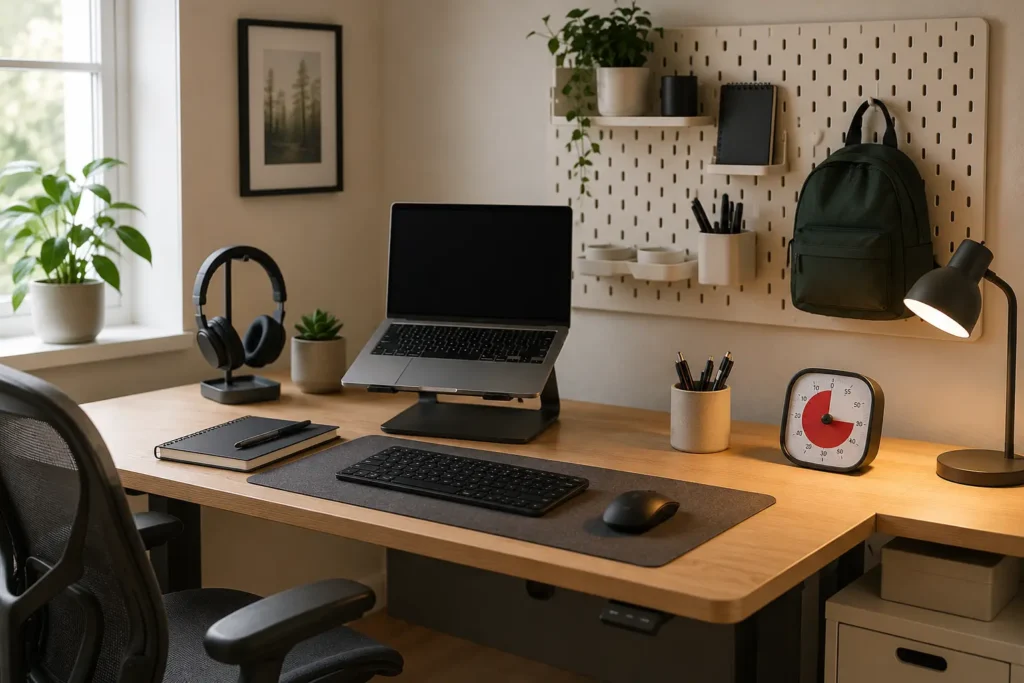
Desk tools earn their place when they solve a recurring annoyance. A shallow in-tray gives unsorted paperwork somewhere to wait without letting it spread across the keyboard. A small container keeps the two or three pens you actually use within reach, and a visual timer can show how long remains without tempting you to open a phone.
Storage needs similar boundaries. When papers, cables and small accessories are distributed between loose piles and several containers, finding the right item can become another interruption. A pegboard or compact desk organiser may keep frequently used items visible without allowing them to spread across the workspace. For more options covering storage, lighting and desk equipment, Best ADHD Desk Setup Tools for Focus and Productivity (UK Guide) brings these different tools together in one comparison.
Real-World Use Cases
Working from home often means one desk has to support paid work, household admin and personal browsing. A document tray with separate sections for current work and personal paperwork can make those roles easier to distinguish. At the end of the working day, the work notebook and laptop can move together, allowing the same surface to feel less like an office during the evening.
For study, an entirely bare desk may not be useful if books, notes and reference materials need to stay visible. Keeping the current module on the desk while placing other subjects on one nearby shelf can reduce competition without hiding everything. A student returning after lunch can see which topic is active without facing material from the rest of the course.
Deep work usually benefits from fewer open choices. Before beginning, the relevant document, notebook and drink might remain within reach while email and unrelated paperwork sit outside the central area. This will not guarantee uninterrupted concentration, but it removes several easy detours during the vulnerable first part of a session.
Evening routines can be less predictable because energy has already been used elsewhere. A small desk reset may mean moving cups to the kitchen and placing loose items in one temporary tray, rather than fully sorting every document. That leaves a workable starting point for tomorrow without turning the end of the day into a lengthy cleaning session.
Tools That May Help
A single document tray can contain paperwork that has not yet been processed. It works particularly well when it is treated as a temporary holding place and checked often enough to prevent it becoming an archaeological site. Open trays are usually easier to remember than storage hidden inside a cabinet.
A desk lamp with a simple switch can help mark the working area and make evening tasks feel less visually tiring, especially when the main room lighting is harsh or uneven. Why Lighting Matters for ADHD Productivity considers how brightness, glare and uneven lighting can influence how comfortable and distracting a workspace feels. Meanwhile, a physical visual timer can support short work periods without introducing notifications, messages or the mysterious fifteen-minute journey that sometimes begins when a phone timer is opened.
A notebook or plain capture pad can also give stray thoughts somewhere to land without requiring an immediate change of task. Recording the thought in one predictable place makes it easier to return to the current job without covering the desk in sticky notes that gradually become part of the background.
What May Still Get in the Way
- The temporary paperwork tray may become full when several busy days arrive together.
- Useful items can disappear from memory when they are stored in opaque drawers or closed boxes.
- A carefully arranged desk may change once a new project needs different equipment.
- Other people may place objects on the desk because the clear surface looks like available storage.
- Low-energy days may call for a two-minute reset rather than a complete sort-out.
Practical Reality Check
A more manageable desk may make starting easier, but it will not remain perfectly arranged every day. Deliveries arrive, drinks accumulate and one urgent task can cover the available surface with paper. The useful measure is whether the desk can be returned to a workable state without requiring half an afternoon.
Some weeks, maintaining the setup may involve putting everything back in its proper place. On others, moving loose material into one holding tray may be enough. Missing several resets does not mean the system has failed; it usually means the desk needs a simpler route back from clutter. When restarting takes only a few minutes, the setup is more likely to survive interruptions and changing energy.
Finding a Desk Layout That Works for You
The most useful desk layout depends on the difficulty that appears most often for you. Someone distracted by visible objects may prefer closed storage with clear labels, whereas someone who forgets what cannot be seen may find open shelves and shallow trays more practical. Both can create a calmer workspace, even though they look quite different.
It is worth noticing where objects naturally end up during a normal week. When documents repeatedly collect on the left of the keyboard, placing the in-tray there will probably work better than choosing a more attractive location across the room. A desk becomes easier to maintain when its layout follows real movements rather than an imagined version of how organised days ought to look.
Frequently Asked Questions
These common questions cover the practical balance between keeping a desk calm and keeping important items easy to remember.
Does an ADHD desk need to be completely clear?
No. A completely clear desk can be unhelpful when useful tools and reminders become difficult to see. It is often enough to keep the main working area open while allowing a few deliberately chosen items to remain visible.
What should stay on the desk?
Items used most days are sensible candidates, such as a laptop, notebook, lamp, drink and one or two pens. Objects connected to occasional tasks can usually live nearby rather than occupying the central workspace permanently.
Is open or closed storage better for ADHD?
Open storage makes items easier to notice, although too much of it can look busy. Closed storage creates a calmer view but benefits from clear labels and simple categories. A mixture often works well: open storage for frequently used items and labelled drawers for everything else.
How often should the desk be reset?
There is no perfect schedule. A short reset at the end of the day may suit some people, while others find that a couple of resets each week are more realistic. The process needs to be brief enough that returning after a missed day does not feel overwhelming.
Can a shared desk still be ADHD-friendly?
Yes, although separate trays, laptop stands or small containers can help each person move their belongings as a group. This avoids having to reorganise every individual item whenever the desk changes from work to personal use.
Final Thoughts
A minimalist ADHD desk is most useful when it makes the next task easier to see without hiding everything required to complete it. The desk will still become untidy during busy or low-energy periods, but simple storage and a clear central area can make returning much less daunting. In everyday life, the setup that works is usually the one that can recover from a messy Wednesday rather than the one that only looks good immediately after it has been organised.
Build a Simple ADHD Productivity System
If you want to bring everything together into one clear setup, this guide shows how tools, apps, and routines can work as one system.