
Quick Answer
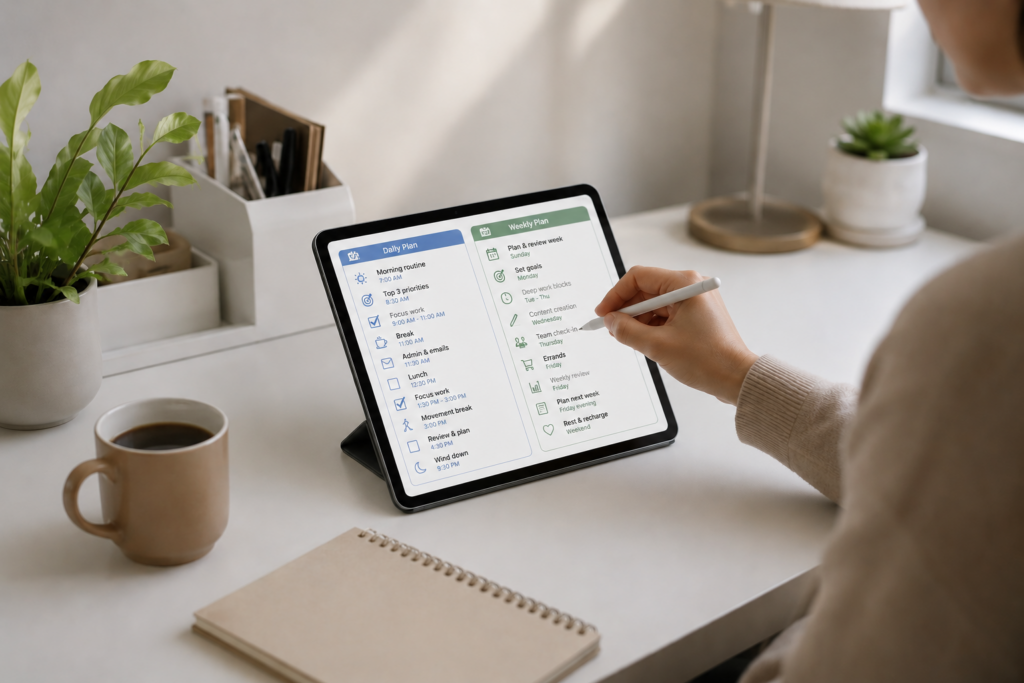
Daily Planning vs Weekly Planning for ADHD is not really about choosing one method over the other. Most ADHD adults benefit from using both together because weekly planning provides direction while daily planning helps manage the reality of each day. When either system is used on its own, important tasks can be forgotten, priorities can become unclear, or planning can quickly feel overwhelming.
Introduction
Daily Planning vs Weekly Planning for ADHD is a common challenge because many people find themselves swinging between two extremes. Some create detailed plans every morning without thinking about the bigger picture, while others build ambitious weekly schedules that look great on Sunday evening but fall apart by Tuesday afternoon. Finding the balance between both approaches often creates a more realistic system that can adapt to changing energy, priorities, and attention levels. If you are building a broader productivity setup, it can help to start with the ADHD Productivity Tools UK Guide.
The difficulty is that ADHD rarely follows a predictable pattern. A task that seemed simple yesterday may feel impossible today, while a project you planned to tackle next week suddenly becomes the only thing you want to focus on. Because of this, planning systems need enough structure to provide direction without becoming so rigid that they create frustration.
Many people discover that the problem is not a lack of planning effort. In fact, ADHD adults often spend a surprising amount of time thinking about what they need to do. The challenge is turning those thoughts into a system that remains useful once real life starts getting involved.
Daily Planning vs Weekly Planning for ADHD: Key Causes
The debate between daily and weekly planning usually appears because ADHD creates unique challenges around time awareness, prioritisation, and follow-through.
- Difficulty visualising future tasks and deadlines
- Changing motivation and energy levels throughout the week
- Time blindness making workload estimation difficult
- Overcommitting during planning sessions
- Forgetting tasks that are not immediately visible
- Struggling to adjust plans when circumstances change
Why This Happens (ADHD Context)
Imagine sitting down on a Sunday evening with good intentions. You create a detailed plan for the week, schedule important tasks, block out time for projects, and feel confident that everything is organised. Then Monday arrives and a meeting runs late, an unexpected email needs attention, and your energy levels are lower than expected. Suddenly the carefully constructed schedule starts to drift.
For many ADHD adults, this experience feels familiar because planning and execution often operate differently. Planning usually happens in a calm environment where possibilities feel achievable. Daily life, however, introduces interruptions, changing priorities, and varying levels of mental energy that can make even realistic plans harder to follow.
This is also why purely daily planning can become problematic. Starting each morning with a blank slate might feel flexible, but important projects often get pushed aside in favour of whatever seems most urgent at that moment. Several days can pass before you realise that the tasks that genuinely matter have barely moved forward.
Resources such as ADDitude regularly discuss how ADHD affects organisation and planning, particularly when future commitments compete with immediate demands for attention.
What Usually Goes Wrong
One common mistake is treating weekly planning as a prediction rather than a guide. A schedule created several days in advance cannot account for every interruption, unexpected task, or change in energy levels. When people expect the plan to be perfect, they often feel they have failed when reality inevitably looks different.
Another issue appears when daily planning becomes entirely reactive. Instead of working from a clear set of priorities, decisions are made based on urgency, visibility, or whatever happens to be demanding attention. This creates busy days that feel productive while important long-term goals quietly remain untouched.
There is also the tendency to plan according to ideal circumstances. It is surprisingly easy to create a schedule for the version of yourself that wakes up motivated, stays focused all day, and never gets distracted. Unfortunately, most people are planning for a human being rather than a productivity robot.
Step-by-Step: How to Fix This
Step 1: Reduce Immediate Triggers
Many ADHD adults find that planning becomes exhausting when every morning starts with a fresh set of decisions. Looking at a blank day and deciding what matters can consume more energy than the work itself.
A weekly plan helps remove some of that pressure because the important decisions have already been made. Rather than building a new plan from scratch each day, the daily review becomes a simple check-in with priorities that are already visible.
Breaking larger weekly goals into smaller actions also reduces the feeling of staring at an overwhelming project with no obvious starting point.
Step 2: Add Effort to Distraction
One reason planning systems disappear is that they slowly become harder to access than distractions. Opening a planner, finding the right page, or checking a task list can feel like effort, while emails, notifications, and social media are already demanding attention.
The planning tools that tend to last are often the ones that stay visible. A calendar that is already open, a planner sitting on a desk, or a dashboard that appears automatically removes small barriers that can otherwise cause priorities to fade into the background.
Step 3: Replace the Habit Loop
The most sustainable planning systems usually create a connection between the week and the day. Without that connection, weekly plans can become forgotten documents while daily plans become reactive lists driven by whatever feels urgent.
A short review each morning or evening often acts as that bridge. The goal is not to create a perfect plan but simply to reconnect with what matters before the day starts filling itself with distractions and unexpected demands.
Step 4: Use Tools That Support Behaviour
The most useful planning tools are rarely the most powerful. They are usually the ones that make information easier to see and require the least effort to maintain. For ADHD adults, visibility often matters more than features because forgotten tasks cannot be acted upon no matter how well organised the system appears on paper.
If you struggle with seeing time visually, you may find value in learning how to build an ADHD calendar system that actually works because it helps connect planning decisions to real-world schedules.
Some people also benefit from understanding why time blocking can help ADHD adults stay organised, particularly when tasks regularly expand beyond their intended time..
Real-World Use Cases
When working from home, weekly planning provides visibility over meetings, deadlines, and larger projects, while daily planning helps decide what deserves attention during available focus periods. Without that daily adjustment, it becomes easy to spend hours on lower-priority work.
Students often benefit from a similar combination. A weekly overview helps track assignments, revision sessions, and deadlines, while daily planning determines what can realistically be achieved around lectures, social commitments, and energy levels.
For deep work, daily planning becomes particularly important because focus-intensive tasks require more than simply finding available time. They need suitable energy levels, reduced distractions, and realistic expectations. A weekly plan may reserve the space, but the daily review decides whether that task fits today’s circumstances.
Evening routines also improve when both systems work together. Rather than ending the day wondering what tomorrow will look like, a brief review can identify unfinished tasks and prepare a simple starting point for the next morning.
Tools That May Help
Calendar apps can provide a useful weekly overview because they make appointments, commitments, and available time easier to visualise. If you are exploring options, the Best Calendar Apps for ADHD Time Management (UK Guide) compares several approaches.
Task management tools can help connect larger weekly goals to smaller daily actions. Some people prefer simple checklists, while others benefit from systems that integrate tasks and calendars together.
Visual timers can also support daily planning by making time easier to see, especially when time blindness causes tasks to take longer than expected. The Best ADHD Focus Timers UK guide explores several options that can support planning routines.
Friction Points to Expect
- Creating plans that assume every day will be equally productive
- Feeling discouraged when a weekly schedule requires adjustment
- Spending more time organising tasks than actually completing them
- Forgetting to review plans consistently
- Trying to maintain an overly detailed system that becomes exhausting
Practical Reality Check
Most ADHD adults have experienced the cycle of discovering a new planner, app, or organisational method and feeling convinced that this will finally be the solution. For a few days everything feels easier, the system gets used constantly, and then gradually the novelty wears off and it starts slipping into the background.
The reality is that planning works best when it remains simple enough to survive imperfect days. Missing a review session, adjusting priorities, or changing plans halfway through the week does not mean the system failed. It means the system is being used by a human being living a real life.
Choosing the Right Support Strategy
When considering Daily Planning vs Weekly Planning for ADHD, the best approach is usually the one that fits your environment, habits, and routine rather than the one that looks most impressive. Weekly planning creates visibility, daily planning creates flexibility, and supportive tools help bridge the gap between intention and action. The right combination will vary from person to person, which is why experimentation is often more valuable than searching for a perfect solution.
Frequently Asked Questions
Is daily planning better than weekly planning for ADHD?
Neither is automatically better. Weekly planning provides direction and visibility, while daily planning helps adapt to changing priorities and energy levels.
How often should I review my weekly plan?
Most people benefit from a weekly review at the start of the week and a brief daily review each morning or evening.
What if I never follow my plans exactly?
That is completely normal. Planning should guide decisions rather than act as a rigid set of instructions.
Should I use a digital or paper planner?
The best option is usually the one you will consistently use. Some people prefer the visibility of paper, while others benefit from reminders and syncing available in digital tools.
Final Thoughts
Daily Planning vs Weekly Planning for ADHD works best when both approaches support each other rather than compete. Weekly planning helps keep important goals visible, while daily planning helps adjust those goals to whatever reality looks like today.
The planning systems that tend to last are not necessarily the most detailed or impressive. They are usually the ones that remain useful on low-energy days, busy days, and distracted days. For many ADHD adults, a system that survives imperfect weeks is far more valuable than one that only works when everything goes according to plan.
Build a Simple ADHD Productivity System
If you want to bring everything together into one clear setup, this guide shows how tools, apps, and routines can work as one system.