
Quick Answer
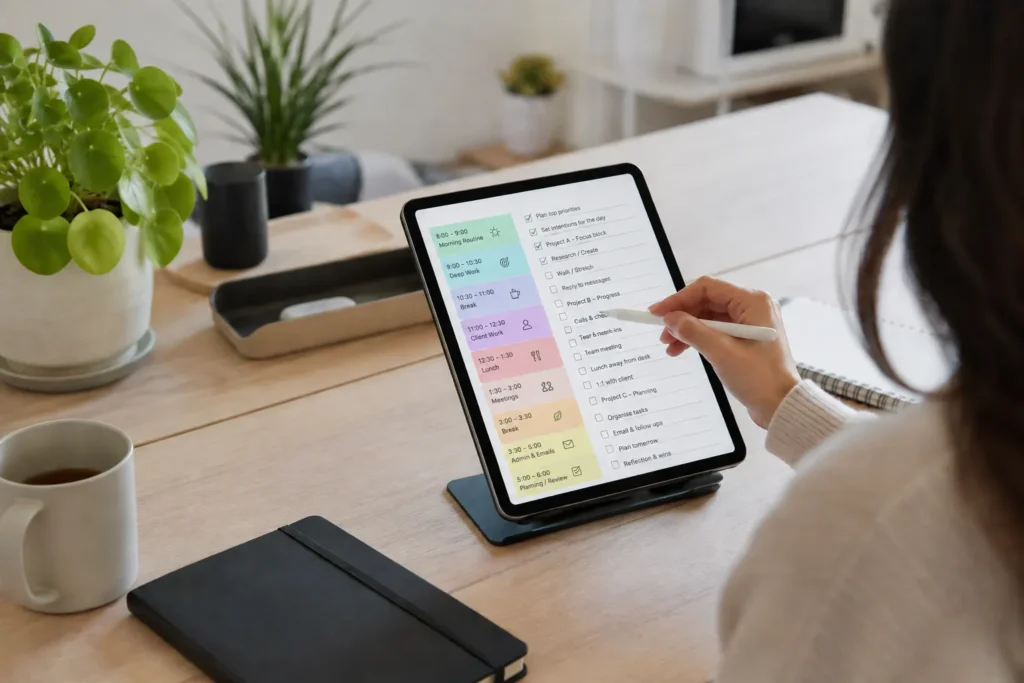
Time blocking can help ADHD adults stay organised because it turns vague intentions into visible parts of the day. Instead of trying to hold every task in your head, you give work, routines, breaks, and admin a clearer place to live.
Introduction
Why Time Blocking Can Help ADHD Adults Stay Organised often comes down to one simple problem: many tasks feel manageable until they are floating around without a time, place, or starting point. If you are trying to build a wider ADHD-friendly productivity setup, the ADHD Productivity Tools UK guide can help you connect planning, reminders, focus tools, and routines into one calmer system.
For many people, time blocking works best when it sits inside a wider calendar system rather than as a standalone technique. Learning how to build an ADHD calendar system that actually works can make time blocks easier to maintain over the long term without turning planning into another thing that needs managing.
For many ADHD adults, the issue is not always knowing what needs doing. It is knowing when to do it, how long it may take, and how to return to it after the day gets interrupted. A to-do list can quickly become a pile of decisions, whereas time blocking gives tasks a shape inside the day.
Why Time Blocking Can Help ADHD Adults Stay Organised: Key Causes
The reason time blocking works well for some ADHD adults is that it reduces the number of open decisions competing for attention. It does not make the day perfect, but it can make the next step easier to see.
- Tasks become easier to start because they are attached to a specific part of the day.
- Planning feels less abstract because time becomes visible rather than imagined.
- Overcommitting becomes easier to notice before the day collapses.
- Breaks and transitions can be planned instead of forgotten.
- Routines become more repeatable because they are linked to familiar time windows.
Why This Happens (ADHD Context)
Many ADHD adults will recognise the experience of starting the day with good intentions, opening a task list, and then feeling strangely stuck. Nothing on the list is impossible, but everything requires a decision. What should come first? How long will it take? Is there enough time before lunch? Should the quick task be done now, or will it accidentally take forty minutes?
That decision load is one of the reasons planning can feel more tiring than the task itself. Time blocking helps by moving some of those decisions out of the moment. Instead of asking your brain to choose from ten competing tasks every hour, you give yourself a rough map to follow.
Some ADHD adults find that planning day by day feels manageable, while others need a wider view of the week to avoid constantly reshuffling tasks. Looking at the differences between daily planning and weekly planning for ADHD can help you find a planning rhythm that feels easier to maintain.
This is also why ADDitude is a useful broader resource for ADHD-friendly strategies and lived experience. The practical challenge is often not motivation alone, but the amount of invisible organisation needed to move through a normal day.
What Usually Goes Wrong
Time blocking tends to go wrong when it is treated like a perfect schedule rather than a flexible support system. A calendar packed from morning to night may look organised, but in real life it can become another source of pressure. One delayed task then pushes everything else out of place, and the whole plan can start to feel ruined.
In practice, adding more tasks, reminders, and calendar blocks does not always create more structure. Sometimes it simply creates more things competing for attention. This is one reason calendar overload can make ADHD planning harder, even when the intention is to become more organised.
Another common mistake is only blocking work tasks. Meals, travel, recovery time, admin, and transitions all take space, even when they do not look productive. When those parts of the day are ignored, the calendar can quietly become unrealistic.
Why Time Blocking Can Help ADHD Adults Stay Organised is not because it forces every minute into control. It works best when it protects attention, reduces guessing, and gives your day a more forgiving structure.
Step-by-Step: How to Fix This
Many ADHD adults discover that time blocking becomes useful when it solves one specific problem rather than trying to organise an entire life overnight.
A common example is protecting a focused work block before distractions start piling up. For someone else, it might be creating a short admin window that stops emails and small tasks leaking across the whole day. Sometimes it is simply an evening reset block that helps tomorrow feel slightly easier than today.
Recurring reminders can make those blocks easier to notice and easier to restart after interruptions. Rather than relying on memory alone, a simple reminder can reduce the effort needed to get back on track. How to Build Routines Using Calendar Reminders explores how reminders can support consistency without creating unnecessary pressure.
The goal is not to build a perfect calendar. The goal is to reduce the number of decisions your brain has to make when attention is already stretched.
Over time, some people add timers, reminders, or recurring calendar events that make important parts of the day easier to spot. The specific setup matters less than whether it still feels realistic on busy days, stressful days, and the days when motivation is nowhere to be found.
Real-World Use Cases
When working from home, time blocking can create boundaries that the environment does not naturally provide. A morning block for focused work, a short admin block, and a clear lunch break can stop the day turning into one long blur of half-started tasks.
For study, time blocking can remove some of the uncertainty that appears every time you sit down to work. Instead of repeatedly deciding what deserves attention next, the decision has already been made earlier. That can make it easier to begin, particularly on days when motivation feels inconsistent.
For deep work, blocking time helps protect attention before the day fills with messages and small requests. A timer can also make the block feel less endless, which is why the best ADHD focus timers UK guide may fit naturally alongside a time blocking routine.
For an evening routine, time blocking can help with the tasks that are easy to avoid because they feel boring or oddly heavy. Washing up, preparing clothes, medication reminders, or setting up tomorrow’s workspace can sit inside a short evening reset rather than becoming a vague expectation.
Tools That May Help
A calendar app can help because it moves plans out of your head and into something visible. For many ADHD adults, the benefit is not better organisation in a traditional sense. It is reducing the effort required to remember what happens next. Whether that comes from Google Calendar, Structured, Motion, or another tool usually matters less than whether the system feels easy enough to keep returning to when life becomes busy.
If you are still trying to build a planning system that feels sustainable,How to Build an ADHD Calendar System That Actually Works explores how calendars, reminders, and routines can work together without creating additional mental load.
A visual timer can also help because it makes the block feel present in the room rather than hidden inside an app. This can be useful when the task is not difficult, but the sense of time is slippery.
For people who prefer a wider planning system, the best productivity apps for ADHD adults UK guide may help you compare task apps that can sit alongside calendar blocking without overcomplicating the setup.
Friction Points to Expect
- The first version of your calendar may be too optimistic, especially if you forget transitions, breaks, meals, or recovery time.
- You may resist the plan when energy is low, so blocks need to be flexible enough to adjust without feeling like failure.
- Too many categories, colours, and reminders can make the system feel busy instead of supportive.
Practical Reality Check
Why Time Blocking Can Help ADHD Adults Stay Organised does not mean every ADHD adult needs a perfectly structured calendar. Some people need a light framework, while others need more visible detail. The useful version is the one that reduces friction rather than adding another thing to maintain.
It is also normal for the system to drift. Most ADHD adults will have days where the calendar gets ignored, interruptions take over, or energy simply disappears. That does not mean the system is broken. In practice, the most sustainable systems are usually the ones that make restarting feel easy rather than making missed days feel like failure.
When plans change, it is often easier to adjust a wider weekly view than repeatedly rebuild each individual day. For some ADHD adults, that broader perspective reduces the feeling of constantly starting over, which is one reason many people explore daily planning versus weekly planning approaches.
Choosing the Right Support Strategy
When thinking about Why Time Blocking Can Help ADHD Adults Stay Organised, it helps to look beyond the calendar itself. The environment matters, because a clear desk, fewer open tabs, or a quieter workspace can make the block easier to enter. Habits matter too, because a repeated starting ritual can reduce the effort needed to begin.
Tools are useful when they remove effort rather than create more of it. If a system requires constant tweaking, colour-coding, reorganising, or checking, it can slowly become another source of mental load. The best setups often feel surprisingly simple because they make everyday decisions easier rather than adding more things to manage.
Frequently Asked Questions
Is time blocking good for ADHD adults?
Time blocking can be helpful for ADHD adults because it reduces some of the decisions that need to be made throughout the day. Making work, routines, and responsibilities more visible often makes them easier to start, particularly when attention or energy feels inconsistent.
How detailed should time blocks be?
Start with broad blocks rather than planning every minute. For example, “focused work”, “admin”, “lunch”, and “evening reset” may be easier to follow than a crowded calendar full of tiny tasks.
What if I do not follow the calendar?
Missing blocks is normal. The goal is not perfect compliance, but having a structure you can return to when the day starts to drift.
Should I use a timer with time blocking?
A timer can be useful if you lose track of time or find open-ended blocks difficult. It gives the block a visible beginning and ending, which can make the task feel more contained.
Final Thoughts
Why Time Blocking Can Help ADHD Adults Stay Organised is really about reducing the amount your brain has to hold at once. A good block gives a task a place in the day, lowers the number of decisions in the moment, and makes it easier to restart when things do not go perfectly.
The most useful approach is usually simple, visible, and forgiving. A system that survives interruptions, busy weeks, and low-energy days will usually outperform a perfectly organised calendar that only works when everything goes according to plan. The aim is not control. It is making everyday decisions feel a little lighter.
Build a Simple ADHD Productivity System
If you want to bring everything together into one clear setup, this guide shows how tools, apps, and routines can work as one system.