
Quick Answer
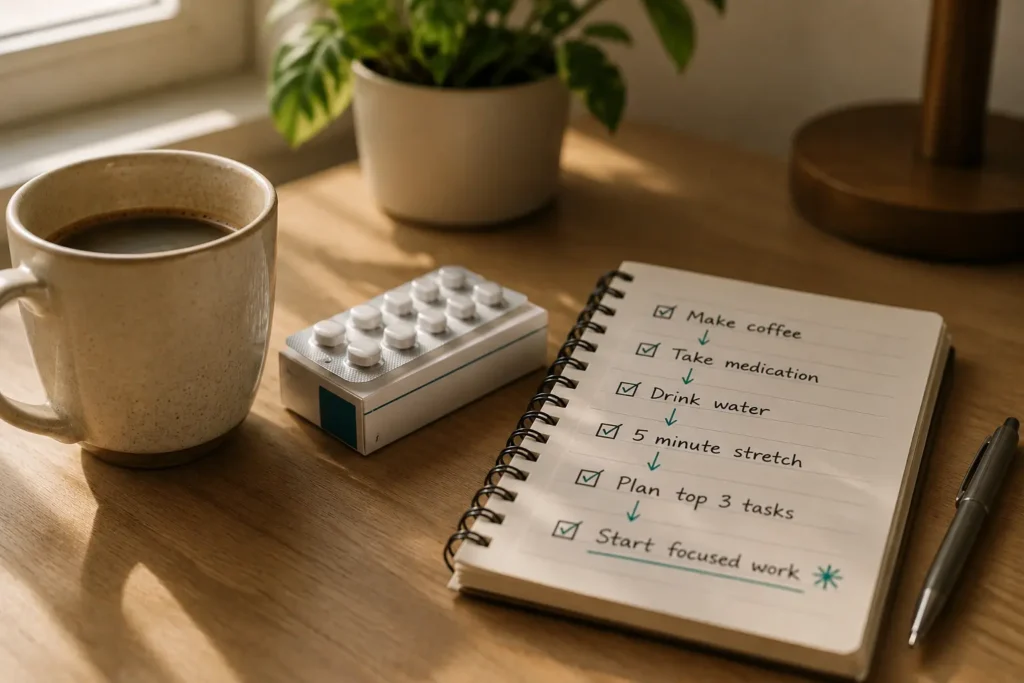
Habit Stacking for ADHD means adding one small action to something you already do regularly, such as making coffee, brushing your teeth or opening your laptop. Instead of having to remember the new habit separately, something that already happens in your day gives you a natural reminder of what you wanted to do next.
Introduction
Habit Stacking for ADHD can make routines easier to begin because it removes the need to remember every action as a separate task. You may genuinely intend to take medication, fill your water bottle or review your daily plan, yet the intention disappears once the morning becomes busy. Pairing that action with something already established gives it a more reliable place in your day, especially when you understand Why ADHD Brains Struggle to Build Habits.
The idea is simple, and it tends to be easier when the added action is small. You might keep your medication beside the coffee machine so you see it when you switch the kettle on, or open your task list straight after signing into your computer. Instead of trying to remember the new habit from nowhere, it becomes part of something you were already doing.
This does not mean every routine will become automatic after a few days. ADHD routines are often affected by changing schedules, distraction, low energy and objects drifting out of sight. The point is not to create a perfect chain that never breaks. It is simply to make the thing you wanted to do easier to remember and easier to come back to when the routine gets interrupted.
Why Habit Stacks Often Break Down
Habit stacking is useful because many routine problems begin before the habit itself. The action may be easy, but noticing the right moment to do it can be surprisingly difficult.
- The new habit has no clear trigger in the existing day
- The action depends on remembering an intention at exactly the right time
- The routine contains too many steps to begin comfortably
- Important objects are stored out of sight or in another room
- The habit is attached to an inconsistent event rather than a dependable cue
- Missing one day creates an all-or-nothing feeling that makes restarting harder
Why This Happens (ADHD Context)
A common experience is walking into the kitchen with the intention of filling a water bottle, noticing something that needs putting away and then leaving without the water. The original intention was real, but it had nothing strong enough to keep it active once another task appeared. This is why reminders based only on memory often feel unreliable in everyday life.
Things you already do regularly can be easier to build around because there is usually something obvious there to remind you. The kettle is visible, the toothbrush is beside the sink and the laptop login screen appears every working day. Putting a small extra action beside one of those moments means you are not relying entirely on remembering it at the right time.
It can also remove one small decision from the day. Instead of opening your laptop and then trying to remember when you meant to check your plan, the two things already happen together. That may seem minor, but on a busy morning when several things are competing for attention, one less decision can make the routine noticeably easier to follow.
Resources such as ADDitude discuss ADHD routines, executive function and practical ways to make everyday actions easier to manage. Habit stacking is only one thing that may help, and it will not make every routine reliable. Sleep, stress, low energy and an unpredictable day can still change what feels manageable.
What Usually Goes Wrong
The most common mistake is stacking a habit that is too large. “After breakfast, I will exercise for forty-five minutes, tidy the kitchen and plan the whole day” sounds organised, but it creates a demanding sequence that is difficult to repeat. When the full version feels unrealistic, the entire stack may be abandoned instead of shortened.
Another problem is building the habit around something that does not actually happen very often. If you only eat breakfast occasionally, linking medication, journalling or planning to breakfast gives you nothing to work from on the mornings when breakfast disappears. Something that happens most days, such as switching off your alarm, going into the bathroom or turning on your computer, is usually much easier to rely on.
Stacks also fail when the supporting items are inconveniently placed. You may plan to write three priorities after making coffee, but the notebook is upstairs and the pen has disappeared. That small amount of friction is often enough for the action to be postponed, especially during a rushed morning.
Finally, people sometimes keep adding new actions until the stack becomes a miniature obstacle course. The first version works, so another step is added, followed by another. Before long, making coffee appears to require hydration, medication, stretching, journalling, planning and cleaning the kitchen. A useful cue has quietly become a routine that feels exhausting before it begins.
Step-by-Step: How to Fix This
Step 1: Start with One Small Thing
Rather than rebuilding your whole morning or evening routine at once, it can be easier to start with one thing that regularly disappears from your day. Filling a water bottle, opening your planner or putting your keys back in the same place are useful examples because they take very little time and you can quickly see whether linking them to something you already do makes them easier to remember.
It is also worth noticing what normally happens at that moment. If you pick up your phone while the kettle boils, the two minutes you meant to use for filling your bottle can disappear into notifications. If email takes over as soon as your laptop opens, checking your task list first may give the day a clearer starting point. You do not need to remove every distraction; sometimes it is enough to make that first small action easier to get to before something else takes over.
Step 2: Make the Useful Thing Easier to Notice
Sometimes the biggest difference is simply having the right thing in front of you. A notebook left on the laptop keyboard is harder to forget than one in a drawer. A water bottle beside the coffee mug has a better chance of being filled than one left in another room. Evening medication beside something you already use before bed may be easier to remember than another notification on your phone.
The opposite can help with distractions. Moving an app away from the first phone screen or leaving the television remote somewhere less automatic gives you a little more time to notice what you were about to do. It does not need to make the distraction difficult. Even a small pause can sometimes be enough to stop an automatic detour.
Step 3: Give the Habit an Obvious Starting Point
The easiest stacks usually have a very obvious moment where one thing leads into the next. “After I switch on the kettle, I will fill my water bottle” is much easier to remember than planning to do it vaguely sometime during the morning. The same could be true of plugging in your phone at night and then putting tomorrow’s clothes somewhere ready.
It also helps when the added task is small enough to survive a difficult day. Opening the planner is easier to return to than expecting yourself to plan the entire week. Putting one thing away is more realistic than turning the moment into a full-room tidy. You may carry on once you have started, but the routine does not need that bigger version to count as useful.
Step 4: Use a Reminder If You Still Need One
A visual checklist, routine app or simple reminder can be useful while the new routine still feels unfamiliar. The important part is that the tool makes the next step easier to see rather than giving you another system to maintain. For broader routines, How to Create a Morning Routine with ADHD can help you arrange several small actions without turning the morning into an unrealistic productivity challenge.
You can also explore the Best Habit and Routine Apps for ADHD when a digital list, visible progress marker or timed prompt would make things easier to follow. Keeping the setup simple matters, because it is very easy to spend an hour building the perfect tracker and still never get around to the two-minute thing the tracker was supposed to help with.
Real-World Use Cases
When working from home, you could review your top three tasks immediately after opening your laptop. This places planning before email, messages and browser tabs begin competing for attention. A second stack might happen after finishing lunch, when you clear one item from the desk before returning to work.
For study, putting your phone in your bag could become the moment that starts the session. Once the phone is away, you might open the relevant document and write down the first question you need to answer. That gives you something immediate to do instead of facing the much heavier idea of needing to “study for two hours”.
During deep work, you might start a focus timer after closing your email tab. The two actions become linked: email closes, timer starts, and the selected task begins. This can work particularly well when a timer or dedicated workspace already helps your brain recognise that it is time to focus. If making time more visible helps you begin or switch tasks, the Best ADHD Focus Timers (UK Guide) compares several physical and app-based approaches.
Evening routines can use equally ordinary anchors. After putting your dinner plate in the kitchen, you might prepare the coffee mug for the morning. After plugging in your phone, you could check that your keys and work bag are ready. These small actions reduce the number of decisions waiting for you the next day and can support How to Build an Evening Routine That Actually Sticks.
Tools That May Help
A paper checklist works well when you need the stack to remain visible without opening an app. Keep it short and place it beside the anchor itself rather than storing it inside a notebook that rarely gets opened.
Routine apps such as Routinery can guide actions in sequence, while habit trackers such as Loop Habit Tracker or Streaks can provide a simple record of repetition. Gamified or supportive tools such as Habitica and Finch may suit people who respond well to progress, encouragement or rewards, although the extra features could feel distracting for someone who wants a quieter system.
A phone alarm may also help while the routine is still new, especially if the thing you meant to do is easy to forget once the day gets busy. A specific reminder such as “After lunch: refill water” is usually more useful than a vague alert because you do not have to stop and remember what you originally set it for.
Friction Points to Expect
- Your normal schedule may change, causing the anchor to disappear
- The new action may gradually become larger and harder to start
- Supporting objects may be moved, hidden or left in another room
- You may stop noticing a reminder after seeing it repeatedly
- Missing several days may make the routine feel as though it has failed
Practical Reality Check
Habit stacks can feel useful quite quickly when there is an obvious reminder built into the day, but that does not mean they will work perfectly every week. A stressful morning, travelling or a change in working hours can easily disrupt something that normally happens without much thought. That does not necessarily mean the idea has stopped helping. Sometimes the thing you attached it to has changed, or the added task has simply become too much for that particular day.
The first thing you try may not be the thing that sticks. Linking something to breakfast, for example, will be unreliable if breakfast regularly gets skipped, while brushing your teeth may happen almost every day without much thought. That is useful information about the routine rather than evidence that you somehow lack discipline.
It is also realistic to keep some habits supported permanently. There is no rule saying reminders, visible objects or checklists must eventually disappear. When an external cue keeps an important action reliable without creating extra stress, it is doing its job.
Finding What Fits Your Routine
Habit Stacking for ADHD tends to be easiest when the reminder is already part of your normal day, the extra action is small and whatever you need is close enough to reach without going looking for it.
Different situations may need slightly different kinds of help. If the main problem is simply forgetting, keeping the item where you will see it may be enough. Something that needs to happen at a particular time may still benefit from an alarm, while a routine app can be useful when several small steps regularly get lost halfway through. Using more than one reminder is fine, as long as the setup still feels easier than the thing it is supposed to help with.
Larger goals can also become less intimidating when they begin with something very small. That is part of what makes Why Tiny Daily Habits Beat Big Goals with ADHD relevant here: a two-minute action you can return to repeatedly may be much more useful than an ambitious routine that works brilliantly for three days and then disappears.
Frequently Asked Questions
What is a good example of habit stacking for ADHD?
A simple example is: “After I switch on the kettle, I will take my medication,” or “After I open my laptop, I will review my three priorities.” The best stack uses an action you already perform consistently and adds one small behaviour immediately afterwards.
How many habits should I stack together?
Starting with one small addition is usually easier than turning an existing routine into a long checklist. If that begins to feel natural, you can add something else later, but long chains can quickly become another routine that feels too big to start.
How long does habit stacking take to work?
There is no fixed timetable. You may remember the action more easily within a few days, but changes in schedule, energy and environment can affect consistency. Focus on whether the cue makes the behaviour easier to begin rather than counting a specific number of days.
What should I do if I keep forgetting the stack?
It may help to move whatever you need somewhere more visible, link the habit to something that happens more reliably or make the added step smaller. A written note or phone reminder can also help while the routine is still new, particularly if it tells you exactly what you meant to do.
Can I use habit stacking for morning and evening routines?
Yes. Morning stacks can support hydration, medication, planning and leaving the house, while evening stacks can help with preparing clothes, charging devices, organising keys or beginning a wind-down routine.
Final Thoughts
Habit Stacking for ADHD is most useful when it turns a vague intention into an obvious next action. By attaching one small behaviour to something that already happens, you reduce the amount of remembering, planning and decision-making required at the moment you need to act.
Starting small and keeping whatever you need somewhere visible gives the routine a better chance of surviving normal life. What works during a quiet week may need to change when work gets busy, mornings shift or energy drops. The aim is not an unbroken chain or a perfectly optimised day. It is something simple enough to notice, use and come back to after it gets interrupted.
Build a Simple ADHD Productivity System
If you want to bring everything together into one clear setup, this guide shows how tools, apps, and routines can work as one system.