
Quick Answer
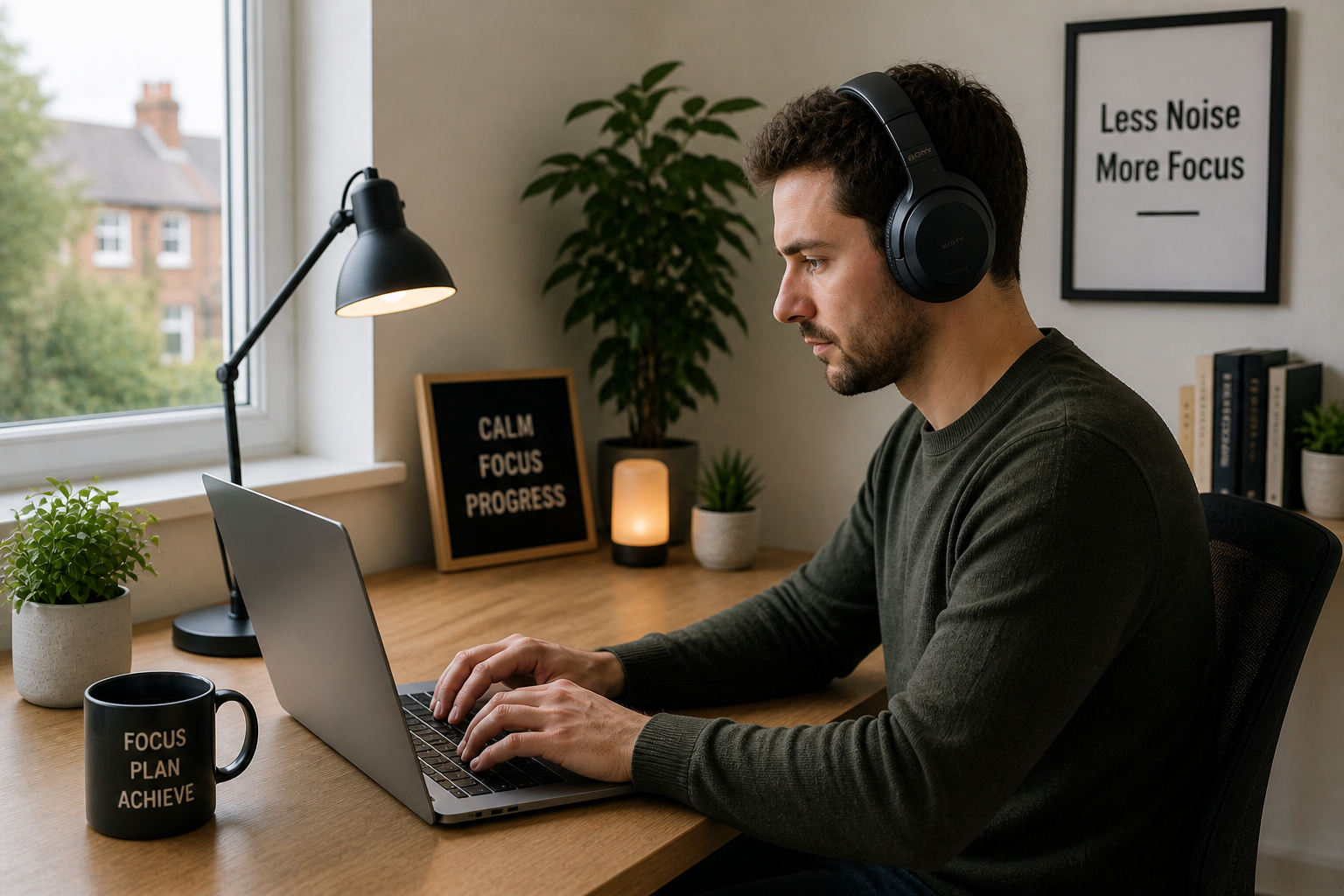
Why Noise Cancelling Helps ADHD Focus comes down to reducing the amount of background sound your brain has to process. It can make work, study, and deep focus feel less mentally noisy, but it works best when paired with realistic routines, clear tasks, and the right environment.
Introduction
Why Noise Cancelling Helps ADHD Focus is a useful question if you find ordinary background noise more draining than other people seem to. For many adults with ADHD, sounds like traffic, talking, keyboard noise, television, or household movement can make it harder to settle into a task and stay there. If you are building a broader ADHD-friendly productivity setup, the Digital Productivity Tools for ADHD UK guide explains how different tools can work together rather than relying on one product to fix everything.
Noise-cancelling headphones can help because they reduce some of the external input competing for your attention. That does not mean they magically create focus. They are better understood as an environmental support: they make the space around you feel calmer so starting, continuing, and finishing a task may become easier.
This guide explains when noise cancelling can help ADHD focus, when it may not be enough, and how to use it in a practical way without expecting it to solve every distraction.
Why Noise Cancelling Helps ADHD Focus: Key Causes
The reason noise cancelling can feel helpful is that ADHD focus is often affected by both internal distraction and external stimulation. Reducing one source of input can make the whole task feel less demanding.
- Background conversations can pull attention away from the task.
- Sudden noises can break concentration and make it hard to restart.
- Busy homes or offices can increase mental fatigue.
- Auditory clutter can make simple tasks feel heavier than they are.
- Phone alerts, television, and household sounds can create repeated attention shifts.
- Too much sensory input can make it harder to move into deep work.
Why This Happens (ADHD Context)
ADHD focus is not just about willpower. Many people with ADHD find that attention is more easily pulled by novelty, movement, sound, and small changes in the environment. A sound that someone else can ignore may become the thing your brain locks onto, even when you are trying to finish something important.
This is why a noisy room can feel so frustrating. You may sit down with good intentions, open the laptop, and then suddenly every door closing, kettle boiling, or conversation nearby becomes part of the task. The work itself may not be the only problem. The environment is asking for attention too.
Why Noise Cancelling Helps ADHD Focus is partly because it lowers that background competition. It gives your brain fewer things to filter. That can make it easier to begin a focus session, stay with one task, or recover after a distraction.
A very normal ADHD moment is putting headphones on and realising you were tense before you even started working. Sometimes the benefit is not dramatic. It is simply that the room feels less “loud” mentally.
Resources such as ADDitude often discuss ADHD challenges around distraction, routines, and environment. Noise cancelling should be seen in that practical context: not as treatment, but as one possible support for reducing friction.
What Usually Goes Wrong
The biggest mistake is expecting headphones to create motivation by themselves. If the task is unclear, too large, boring, or emotionally loaded, silence alone may not fix it. You may still avoid the task, drift into another tab, or use the headphones while doing something completely unrelated.
Another problem is using noise cancelling without a focus plan. Putting headphones on can become a “preparation ritual” that feels productive, but if you do not decide what you are actually doing next, the calmer environment may simply make it easier to procrastinate comfortably.
Some people also find full silence uncomfortable. Noise cancelling may reduce external sound, but it can make internal restlessness more noticeable. In that case, quiet music, brown noise, white noise, or a low-distraction playlist may work better than silence.
Step-by-Step: How to Fix This
Step 1: Reduce Immediate Triggers
Start by identifying the sounds that break your focus most often. This might be people talking, traffic, pets, television, washing machines, or general household movement. The goal is not to create a perfect environment. The goal is to reduce the most common triggers before they pull you away from the task.
Put your headphones on before the difficult part starts, not after you are already overwhelmed. This can be especially useful before writing, admin, study, planning, or anything that requires sustained attention.
Step 2: Add Effort to Distraction
Noise cancelling works better when you also make distraction slightly harder. Close unnecessary tabs, move your phone away, and decide what you are working on before you start. This matters because headphones reduce sound distraction, but they do not stop you from opening social media, email, or shopping tabs.
If digital distraction is the bigger issue, a tool from the best distraction-blocking apps for ADHD adults UK guide may be a better cross-support than relying on headphones alone.
Step 3: Replace the Habit Loop
Many distractions become habits. You hear a sound, check your phone, open a new tab, or leave the task. Instead of only removing noise, create a replacement action. For example, when you notice yourself drifting, write down the distraction on a notepad and return to the current task for five more minutes.
This helps because the brain still gets an action, but it does not fully abandon the task. It is a small change, but small changes are often more realistic than trying to become perfectly focused overnight.
Step 4: Use Tools That Support Behaviour
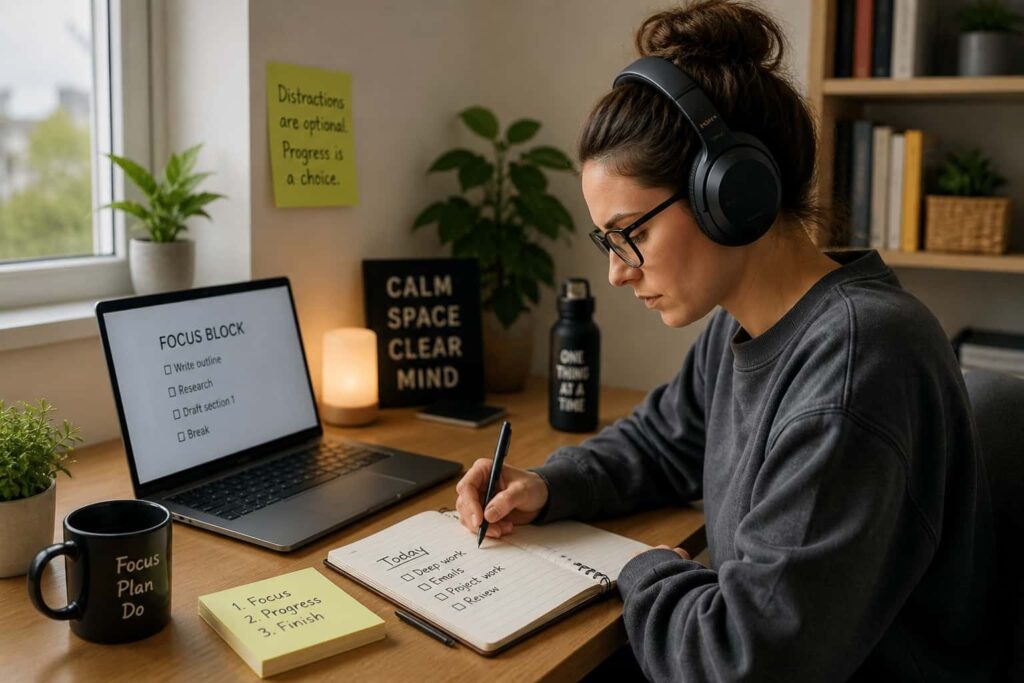
For many people, headphones work best as part of a simple focus routine. You might put them on, set one clear task, use a timer, and work for a short block. If you are comparing options, the best noise-cancelling headphones for ADHD adults in the UK guide can help you choose a pair based on comfort, budget, and focus needs.
Why Noise Cancelling Helps ADHD Focus is not because the headphones do all the work. It is because they reduce one layer of friction so the rest of your routine has a better chance of working.
Real-World Use Cases
Working from home: Noise cancelling can help reduce household sounds, neighbours, traffic, or other people moving around. This can be especially useful if you do not have a separate office and need to create a focus boundary in a shared space.
Study: Students may find noise cancelling helpful for reading, revision, essay planning, or online learning. It can make a library, bedroom, or shared accommodation feel more predictable.
Deep work: For writing, analysis, design, coding, or complex planning, reducing background noise can make it easier to stay with one thread of thought. This is where the benefit can feel most noticeable.
Evening routine: Noise cancelling can also help with lower-pressure tasks like planning tomorrow, sorting emails, or doing a short reset. It may help signal that the day is shifting into a quieter mode.
Tools That May Help
Noise-cancelling headphones are the obvious tool, but the best choice depends on how you work. Some people need strong active noise cancellation for busy environments. Others mainly need comfort, long battery life, or a budget-friendly pair that makes the room feel less distracting.
If you want a premium option for stronger noise reduction, the Sony WH-1000XM5 review for ADHD focus may be a useful place to start. If comfort or budget matters more, it may be better to compare a few options before deciding.
Other tools can also help. A visual timer can give the focus session a clear endpoint. A distraction-blocking app can reduce the temptation to drift online. A tablet or notebook can help keep the task visible without opening more browser tabs.
Friction Points to Expect
- Noise cancelling may feel strange or too quiet at first.
- Headphones can become uncomfortable during long sessions.
- They may reduce sound distractions but not digital distractions.
- Some people focus better with gentle background sound than silence.
- They work best when paired with a clear task and routine.
Practical Reality Check
Noise cancelling is helpful, but it is not a full ADHD productivity system. It will not choose the task, remove emotional resistance, fix sleep, or stop every distraction. What it can do is make your environment easier to manage.
That matters because ADHD-friendly productivity is often about reducing friction. If the room feels calmer, the task may feel slightly easier to start. If sudden sounds are reduced, you may lose your place less often. If your headphones become a cue for focus, your brain may start to recognise that pattern over time.
The realistic goal is not perfect concentration. It is fewer interruptions, easier starts, and a better chance of staying with the task long enough to make progress.
Choosing the Right Support Strategy
Choosing the right support strategy starts with knowing what is actually getting in the way. If your main issue is environmental noise, headphones may help. If your main issue is checking your phone, you may need app blocking or a different phone setup. If your main issue is forgetting tasks, reminders or visual planning may be more useful.
Why Noise Cancelling Helps ADHD Focus is easiest to understand when you see it as one part of a wider routine. The environment matters, but so do habits, tools, task size, and timing.
A good support strategy might look simple: choose one task, put on headphones, set a short timer, remove your phone from reach, and work until the timer ends. That is not flashy, but it is realistic. And realistic systems are usually the ones that survive normal busy weeks.
Frequently Asked Questions
Does noise cancelling really help ADHD focus?
It can help some people by reducing background sound and making the environment feel calmer. It is most useful when noise is one of the main things pulling your attention away.
Is silence always best for ADHD?
No. Some people focus better with silence, while others prefer low music, brown noise, white noise, or ambient sound. The best option is the one that helps you stay with the task without becoming another distraction.
Can noise-cancelling headphones stop procrastination?
Not by themselves. They can reduce environmental friction, but you still need a clear task, realistic session length, and a way to manage digital distractions.
Are noise-cancelling headphones better than earbuds for ADHD?
It depends on comfort, noise reduction, and how you use them. Headphones often create a stronger physical focus cue, while earbuds may be easier for travel or short sessions.
When should I avoid using noise cancelling?
Avoid using it when you need to stay aware of your surroundings, such as near traffic, while caring for others, or in situations where hearing alarms or conversation is important.
Final Thoughts
Why Noise Cancelling Helps ADHD Focus is really about reducing the amount of background input your brain has to fight through. For some people, that can make work, study, and planning feel noticeably easier. For others, it may only help a little unless it is combined with better task structure and fewer digital distractions.
The most useful approach is to treat noise cancelling as a support tool, not a magic fix. Use it to create a calmer environment, then pair it with a clear task, a short focus block, and a routine you can repeat. That is where it has the best chance of making everyday focus feel more manageable.
Build a Simple ADHD Productivity System
If you want to bring everything together into one clear setup, this guide shows how tools, apps, and routines can work as one system.