
Quick Answer
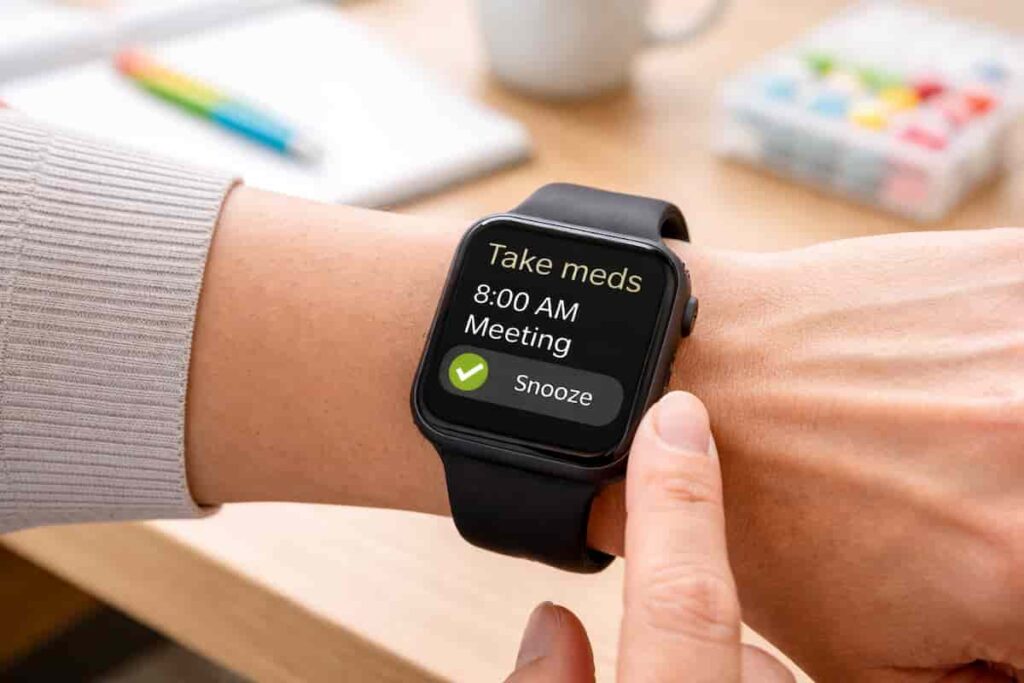
If you want to stop missing reminders with ADHD, using a smartwatch works best when you make alerts unavoidable, reduce phone distraction, and build a simple routine around them. The key is not just setting reminders — it’s making them impossible to ignore and easy to act on immediately.
Introduction
How to Stop Missing Reminders with ADHD Using a Smartwatch (UK Guide) is a common challenge because reminders often blend into background noise or get dismissed too quickly. Many people with ADHD set reminders — but still miss them because they arrive at the wrong time, on the wrong device, or without enough urgency.
If you’ve ever set a reminder on your phone and ignored it without thinking, you’re not alone. One of the most effective solutions is shifting reminders to a wearable device that physically interrupts your attention. Smartwatches create a different kind of signal — one that’s harder to ignore.
For a full breakdown of recommended devices, you can explore best smart watches for ADHD task reminders.
How to Stop Missing Reminders with ADHD Using a Smartwatch (UK Guide): Key Causes
Missing reminders isn’t usually about forgetfulness — it’s about how your brain processes interruptions and attention shifts.
- Notifications blend into background noise
- Phone-based reminders get ignored during scrolling
- Poor timing (alerts arrive when you’re already distracted)
- Lack of urgency or physical interruption
- Too many reminders causing overload
- No clear action linked to the reminder
Why This Happens (ADHD Context)
ADHD brains are highly sensitive to novelty but quickly adapt to repeated signals. That means a reminder that felt helpful yesterday can become invisible today.
Phone notifications are especially problematic because they compete with everything else — messages, apps, social media. Your brain learns to dismiss them automatically.
I’ve personally noticed that I can swipe away a phone reminder without even registering what it said — almost like muscle memory. But a vibration on my wrist interrupts me just enough to pause and actually process it.
What Usually Goes Wrong
Most reminder systems fail not because they don’t exist — but because they’re poorly designed for ADHD behaviour.
Common mistakes include:
- Setting too many reminders, causing overwhelm
- Using silent or low-priority notifications
- Relying only on phone alerts
- Not linking reminders to immediate action
- Dismissing alerts without completing the task
These systems assume you’ll respond rationally — but ADHD often works on impulse and environment, not intention.
Step-by-Step: How to Fix This
Step 1: Reduce Immediate Triggers
Turn off non-essential notifications on your phone. The more noise you remove, the more powerful your smartwatch reminders become.
Step 2: Make It Harder to Get Distracted
Keep your phone out of reach during focus periods. Let your smartwatch become your primary alert system.
Step 3: Replace the Habit Loop
Instead of checking your phone constantly, train yourself to respond only to wrist-based alerts. This reduces impulsive checking.
Step 4: Use Tools That Support Behaviour
Choose a smartwatch with strong vibration alerts, simple interfaces, and reliable notifications. For example, devices like the Apple Watch Series 9 or Samsung Galaxy Watch 6 are often used for this purpose.
If you’re unsure which device fits your setup best, you can compare options in this full smartwatch guide.
Real-World Use Cases
Working from home: Set reminders that vibrate every hour to reset focus or switch tasks. This prevents drifting into unproductive loops.
Study sessions: Use short interval reminders (20–30 minutes) to prompt breaks and prevent burnout.
Deep work blocks: Set a single strong reminder at the end of a session rather than multiple interruptions.
Evening routine: Use reminders for wind-down activities like preparing for bed or planning the next day.
Tools That May Help
Some tools are better suited to ADHD-friendly reminders because they prioritise simplicity and visibility.
For example, the Fitbit Versa 4 offers straightforward reminders without overwhelming features, while the Amazfit Bip 5 is a more budget-friendly option with strong notification visibility.
The goal isn’t to find the “best” device — it’s to find one that you’ll actually wear consistently.
Friction Points to Expect
- You may initially ignore smartwatch alerts out of habit
- Too many reminders can still cause overload
- Forgetting to wear or charge the watch
- Overcomplicating your setup with too many apps
- Expecting instant behaviour change
Practical Reality Check
No system will make you perfectly consistent overnight. Smartwatches don’t fix ADHD — they support better habits.
The real benefit comes from reducing friction and making reminders harder to ignore, not from adding more complexity.
Choosing the Right Support Strategy
When thinking about How to Stop Missing Reminders with ADHD Using a Smartwatch (UK Guide), it helps to focus on strategy rather than just tools.
- Environment control: Reduce phone distractions
- Habit replacement: Respond to wrist alerts instead of checking your phone
- Tool support: Use a smartwatch that fits your lifestyle
- Routine fit: Build reminders into your daily flow
Frequently Asked Questions
Do smartwatches really help with ADHD reminders?
They can help by creating physical interruptions that are harder to ignore than phone notifications, especially when used consistently.
Why do I ignore reminders even when they go off?
This is often due to habit loops and notification fatigue. Your brain learns to dismiss repeated alerts automatically.
How many reminders should I set?
Keep it minimal. Focus on key tasks rather than filling your day with alerts.
Is a smartwatch better than a phone for reminders?
For many people with ADHD, yes — because it separates reminders from distractions.
Final Thoughts
How to Stop Missing Reminders with ADHD Using a Smartwatch (UK Guide) comes down to designing a system that works with your brain, not against it.
Smartwatches aren’t a magic fix — but they can make reminders more visible, more physical, and more actionable. When combined with simple habits and reduced distraction, they can significantly improve how often you actually follow through.
Keep it simple, stay consistent, and focus on progress rather than perfection.
If you’re ready to try this approach, choosing the right smartwatch can make a big difference. You can explore the most suitable options in this ADHD smartwatch guide.