At a Glance
- Strong active noise cancellation designed for consistent background reduction
- Comfortable over-ear design suited for long focus sessions
- Simple controls with minimal distractions or complexity
- Reliable battery life for full workdays or study blocks
- Best suited for reducing environmental noise rather than boosting productivity features
Check price and available options on Amazon
Introduction
The Bose QuietComfort 45 Review for ADHD really comes down to one simple question: can blocking out noise actually make it easier to focus?
If background noise, conversations, or general sensory overload tend to pull your attention away, headphones like these can help cut through that and make it easier to stay on track.
For a lot of people, focus is not just about discipline — it is about environment. And that is exactly where noise-cancelling headphones come in. They do not force you to concentrate, but they can make it easier to create the conditions where focus feels possible.
Bose QuietComfort 45 Review for ADHD: Key Features
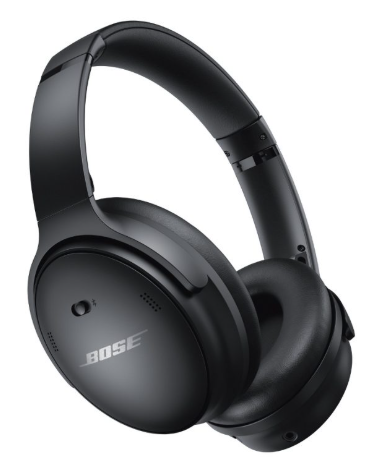
What stands out pretty quickly with the Bose QuietComfort 45 is how simple it is — it just works without getting in your way.
- Advanced active noise cancellation for reducing background noise
- Lightweight over-ear design for extended wear
- Up to 24 hours of battery life
- Simple physical controls instead of complex touch gestures
- Aware mode for letting in external sound when needed
- Balanced audio profile for music, white noise, or ambient sound
Who This Guide Is For
- Adults with ADHD who are easily distracted by environmental noise
- Remote workers dealing with busy or unpredictable surroundings
- Students needing consistent focus during study sessions
- People who struggle with sensory overload in shared spaces
- Anyone trying to reduce reliance on willpower for focus
Key Takeaways
- Noise cancellation is the main value — not extra features
- Comfort makes a big difference for longer sessions
- Simple controls reduce distraction rather than add to it
- Works best as part of a wider focus setup
- Not a solution on its own, but a strong environmental tool
How It Works
The Bose QuietComfort 45 uses active noise cancellation to reduce the kind of background noise that usually breaks your focus — things like traffic, conversations, or general room noise.
In real terms, that just means your environment feels quieter and less demanding. Instead of constantly reacting to sounds around you, you get a bit more mental space to stay with what you are doing.
You can then layer in music, white noise, or just use the silence — whatever works best for you. The headphones do not try to control how you focus, they just make it easier to create the right conditions for it.
Why It May Help (ADHD Context)
A big part of ADHD is not just what is going on in your head — it is everything going on around you.
Even small sounds can pull your attention away without you really noticing, and once you have been distracted, getting back into the task can feel harder than starting it in the first place.
That is where something like the Bose QuietComfort 45 can help. It lowers the overall noise level so your brain is not constantly reacting to your environment. You are not fighting for focus as much — it just becomes a bit easier to stay where you are.
Resources like ADDitude often highlight how environmental control plays a role in managing attention. This is a good example of that in practice.
One underrated benefit as well — you are not reaching for your phone as much. And for most people, that alone removes a huge source of distraction.
Real-World Use Cases
In real life, the Bose QuietComfort 45 tends to shine in everyday situations rather than extreme ones.
For remote work, it helps create a boundary between you and your environment. Whether it is background conversations, traffic noise, or general household activity, the headphones reduce the constant pull on your attention.
For study sessions, it can make a noticeable difference when you are trying to read, write, or revise. Instead of reacting to every sound, you can stay more consistently engaged with the material.
They are also useful for transitions. If you struggle to switch into “focus mode,” putting on headphones can act as a signal that it is time to start. That small routine cue can be surprisingly powerful.
Even in everyday tasks like admin, emails, or tidying, having a quieter environment can make starting feel less overwhelming.
Feature Breakdown Table
| Feature | What It Means in Practice | Why It Matters for ADHD |
|---|---|---|
| Noise cancellation | Reduces background noise consistently | Lowers distraction from environment |
| Comfortable design | Can be worn for long sessions | Supports sustained focus |
| Simple controls | No complex gestures or menus | Less friction and fewer distractions |
| Battery life | Lasts full work or study days | Reliable without frequent charging |
| Aware mode | Lets in sound when needed | Useful for flexibility and safety |
Focus Environment Fit
The Bose QuietComfort 45 works best in environments where noise is the main problem. This includes home offices, shared living spaces, libraries, or commuting.
It is less about boosting productivity directly and more about removing the constant interruptions that make focus difficult. If your environment feels chaotic or unpredictable, these headphones can help create a more stable baseline.
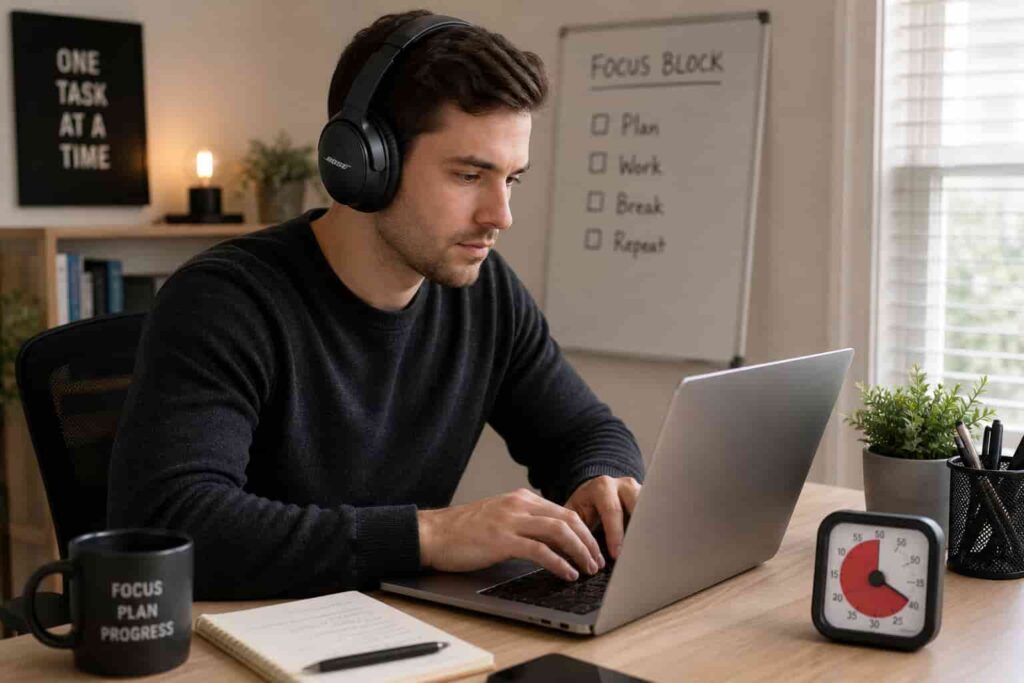
That said, they work best when combined with a simple setup. Pairing them with a clear task, a timer, or a structured routine makes the benefit much more noticeable.
Real Use Review
In everyday use, the Bose QuietComfort 45 feels solid and dependable — not flashy, just reliable in a way that makes you actually want to keep using it.
The comfort is one of the first things you notice. You can wear them for a full work session without constantly adjusting them or feeling pressure, which makes a bigger difference than you might expect.
The noise cancellation does what you need it to do. It does not completely erase the world, but it reduces enough of it that your attention does not keep getting pulled away.
And importantly, there is no real learning curve. You put them on, press a button, and get on with what you were doing. That simplicity is probably one of the biggest reasons they work so well for ADHD — there is nothing extra to manage.
If you are anything like me, tools that feel effortless are the ones that actually stick.
Friction Points to Consider
- Premium price compared to simpler headphones
- Does not include advanced productivity features
- Noise cancellation is strong but not total silence
- Requires charging, unlike passive alternatives
- May not help if distraction is mainly internal
Practical Reality Check
It is worth being realistic here — the Bose QuietComfort 45 is not going to magically fix focus on its own.
What it does do is remove one of the biggest external problems: noise. And for a lot of people, that is enough to make everything else easier.
If your main struggle is a busy or distracting environment, this can make a noticeable difference. If your focus issues are more about motivation, overwhelm, or structure, you will still need something alongside it.
Think of it less as a solution on its own, and more as something that makes your other focus strategies actually work better.
Buying Guide
Before buying, think about how often noise interrupts your focus. If it is a daily issue, investing in strong noise cancellation can make sense.
Also consider comfort. If you plan to wear them for long sessions, lightweight design matters more than extra features.
Finally, think about simplicity. If you prefer tools that just work without setup or learning curves, this model fits well.
Frequently Asked Questions
Is the Bose QuietComfort 45 good for ADHD?
It can help by reducing environmental noise, making it easier to stay focused on tasks.
Does noise cancelling improve focus?
For many people, yes. It reduces interruptions and lowers the effort needed to concentrate.
Can I use them without music?
Yes. Noise cancellation works on its own, even without audio playing.
Are they comfortable for long sessions?
Yes, they are designed for extended wear and generally feel lightweight.
Do they replace other productivity tools?
No. They work best alongside timers, routines, or structured workflows.
Alternatives to Consider
If you are comparing options, it is worth exploring other models within the Best Noise-Cancelling Headphones for ADHD (UK) guide. Some alternatives may offer different features, pricing, or sound profiles depending on what you prefer.
You may also find value in combining headphones with other tools. For example, using them alongside structured setups from the ADHD Productivity Tools UK guide can create a more complete system rather than relying on one tool alone.
Ultimately, the best option depends on whether your main challenge is noise, comfort, or overall workflow.
Final Verdict
The Bose QuietComfort 45 Review for ADHD really comes down to this: if noise is what keeps breaking your focus, these can make a genuine difference.
They are comfortable, simple to use, and do exactly what they are meant to do without adding extra friction. That combination is what makes them work so well in day-to-day use.
They will not fix everything — no tool does — but they can remove one of the biggest barriers to staying focused. And sometimes, that is all you need to get going.
Build a Simple ADHD Productivity System
If you want to bring everything together into one clear setup, this guide shows how tools, apps, and routines can work as one system.