
Quick Answer
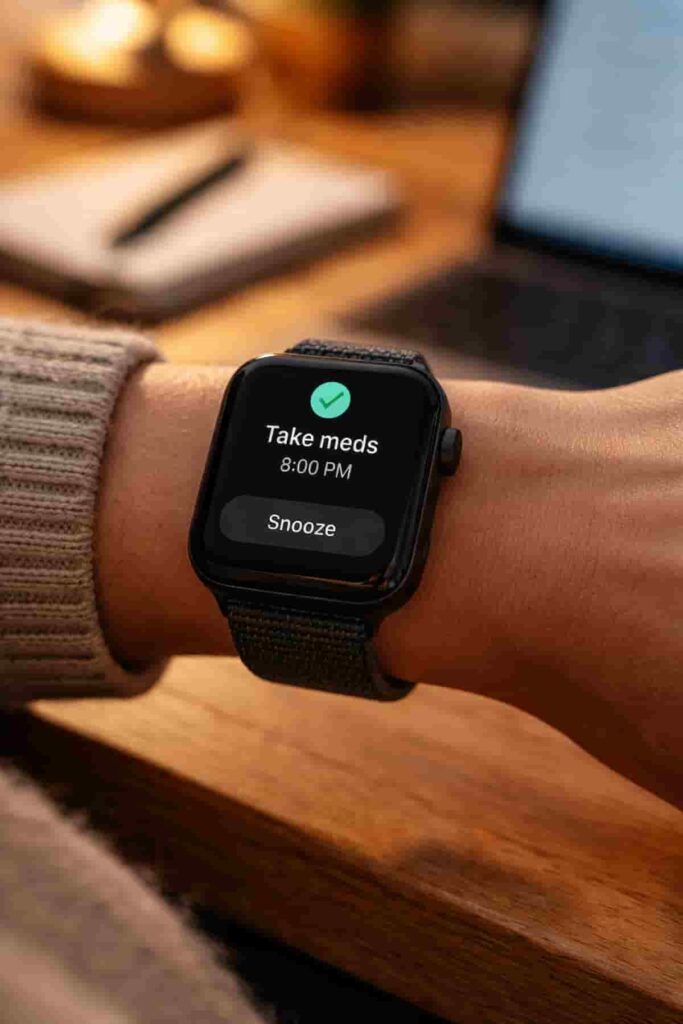
Why Smartwatch Reminders Work Better Than Phone Notifications for ADHD often comes down to how the reminder is delivered. A smartwatch uses physical vibration and quick-glance alerts, which are harder to ignore and less likely to lead into distraction compared to unlocking a phone.
Phones can be the main source of distraction, reminders on them can easily get lost or lead to task switching. A smartwatch separates the reminder from the distraction.
Understanding why smartwatch reminders work better than phone notifications for ADHD can help you build a more reliable reminder system that actually leads to action.
Introduction
Why Smartwatch Reminders Work Better Than Phone Notifications for ADHD is an important question if you have ever missed reminders despite setting them correctly. The issue is rarely the reminder itself. It is the environment it arrives in.
On a phone, reminders sit alongside messages, emails, social apps, and notifications competing for your attention. This means even a well-timed reminder can lead to distraction instead of action. If you are exploring better options, it is worth looking at best smart watches for ADHD task reminders to see how wearable alerts change this experience.
A smartwatch creates a different interaction. Instead of pulling you into a device, it gives you a quick prompt on your wrist. That small difference can significantly improve follow-through, especially for people with ADHD who struggle with task switching and distraction loops.
I have personally found that when a reminder appears on my watch, I act on it far more often. When it appears on my phone, there is always a risk I end up checking something else first.
Why Smartwatch Reminders Work Better Than Phone Notifications for ADHD: Key Causes
The main advantage comes from reducing friction between noticing a reminder and acting on it, while also reducing the chance of distraction.
- Wrist-based vibration creates a physical interruption that is harder to ignore.
- Quick-glance notifications reduce the need to unlock a device.
- Smartwatches separate reminders from high-distraction environments.
- Alerts are more noticeable during movement or busy environments.
- Less exposure to apps reduces impulsive checking behaviour.
- Repeated prompts can support time awareness throughout the day.
Why This Happens (ADHD Context)
ADHD often affects how attention is regulated rather than how much attention you have. This means that even when a reminder appears, it may not lead to action if something more stimulating is available at the same time.
A phone is full of competing stimuli. When a notification appears, it sits next to messages, app icons, and alerts designed to capture attention. This creates a situation where the brain shifts focus before the reminder has a chance to translate into action.
A smartwatch removes most of that competition. The alert is short, direct, and usually limited to one piece of information. That makes it easier to process quickly and act on immediately.
There is also a time-awareness benefit. Many people with ADHD struggle with “time blindness”, where it is difficult to feel the passage of time. Regular wrist-based prompts can act as anchors throughout the day.
I have noticed that a watch vibration feels more like a direct prompt, whereas a phone notification feels optional and easy to ignore.
If you are interested in building systems to help combat this the complete ADHD productivity system guide shows how to combine tools effectively.
What Usually Goes Wrong
One of the most common issues is relying entirely on phone notifications while also using the phone for entertainment and communication. This creates constant context switching.
Another problem is overloading yourself with too many reminders. When everything is urgent, nothing stands out. Notifications become background noise and are dismissed without you being able to act on them.
Vague reminders also reduce effectiveness. If a reminder requires extra thinking, it is more likely to be delayed or ignored.
Finally, many people check their phone automatically when it lights up. This means a reminder can unintentionally trigger a distraction loop instead of helping you stay on track.
Havi
Step-by-Step: How to Fix This
Step 1: Reduce Immediate Triggers
Turn off non-essential phone notifications. This ensures that when a reminder appears, it is not competing with multiple other alerts.
Keep only essential notifications on your phone, such as calls or key messages. Everything else should be limited or removed.
Step 2: Add Friction to Distraction
Use a smartwatch as your primary reminder device. This creates a separation between reminders and distractions.
By receiving alerts on your wrist, you reduce the chance of unlocking your phone and drifting into unrelated apps.
Step 3: Replace the Habit Loop
Create a simple rule for reminders: when it appears, you either act on it, snooze it intentionally, or reschedule it.
This prevents vague “I’ll do it in a minute” thinking, which often leads to forgetting entirely.
Step 4: Use Tools That Support Behaviour
Choose a smartwatch that fits your routine and is easy to use. For example, the Apple Watch Series 9 for ADHD task reminders offers strong integration and customisable alerts.
If you use Android, the Samsung Galaxy Watch 6 for ADHD task reminders provides similar functionality with flexible notification control.
For simpler or budget-friendly setups, the Amazfit Bip 5 for ADHD task reminders UK review can still provide consistent reminder prompts without unnecessary complexity.
Real-World Use Cases
Working from home: A smartwatch can prompt task transitions without pulling you into your phone. This helps maintain focus during work blocks.
Study sessions: Wrist alerts can signal when to start, take breaks, or switch topics without interrupting concentration.
Deep work blocks: Smartwatch reminders can act as checkpoints, helping you stay on track without opening distracting apps.
Evening routine: Prompts for winding down, preparing for the next day, or taking medication are easier to follow when they do not require interacting with a phone.
Tools That May Help
Different smartwatches offer different strengths depending on your needs.
The Fitbit Versa 4 for ADHD task reminders is a good lightweight option for simple reminders and daily structure.
The Ruimen smart watch for ADHD task reminders may suit those looking for a basic and affordable reminder system.
Choosing the right device depends on your routine, preferences, and how much customisation you need.
For broader ADHD strategies and attention support, ADDitude is also a useful external resource.
Choosing the Right Support Strategy
When deciding how to improve your system, focus on environment control, habit replacement, and tool support. Why Smartwatch Reminders Work Better Than Phone Notifications for ADHD becomes clearer when you see how each layer supports the other.
A smartwatch reduces distraction at the moment of the reminder. Clear routines ensure the reminder leads to action. The right device ensures the system fits your daily life.
Start simple, test what works, and adjust gradually.
Frequently Asked Questions
Are smartwatch reminders always better than phone notifications for ADHD?
Not always, but they are often more effective when phone use is a major source of distraction.
Do I need an expensive smartwatch?
No. Even basic models can provide effective reminders if used consistently.
How many reminders should I set?
Keep it limited to important tasks. Too many reminders can reduce their effectiveness.
Can I use both smartwatch and phone reminders together?
Yes, combining both can work well if each has a clear purpose.
Final Thoughts
Why smartwatch reminders work better than phone notifications for ADHD is largely about reducing distraction at the moment of action. A smartwatch delivers reminders in a simpler, more focused way, making it easier to notice and respond without getting sidetracked. In contrast, checking a reminder on your phone can easily pull you into other apps, leading to scrolling and loss of focus.
While it is not a perfect solution, it can significantly improve how reminders function in daily life. For many people with ADHD, this shift can lead to better consistency, fewer missed tasks, and less frustration over time.
Build a Simple ADHD Productivity System
If you want to bring everything together into one clear setup, this guide shows how tools, apps, and routines can work as one system.