
https://amzn.to/4bTQuso
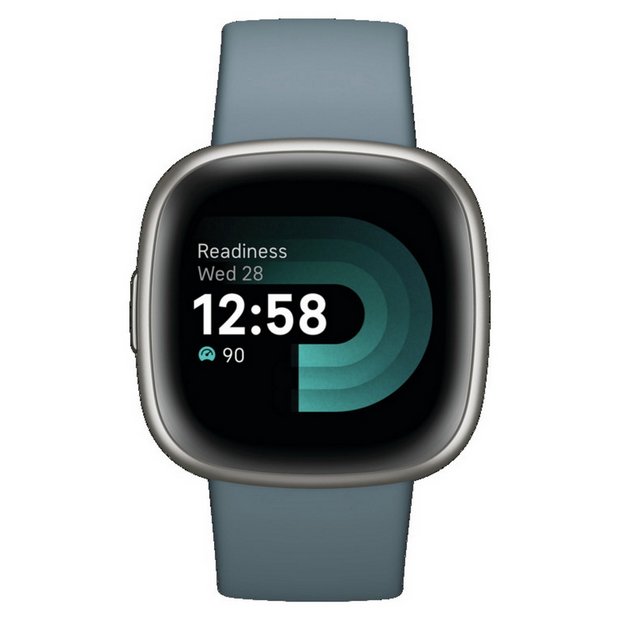
Check Current Price & Availability
View the latest price and see whether the Samsung Galaxy Watch 6 fits your reminder setup.
At a Glance
- Lightweight smartwatch with strong battery life for all-day reminders
- Simple notification system for tasks, alarms, and calendar prompts
- Works best when paired with structured routines
- Less complex than premium smartwatches, reducing overwhelm
- Limited third-party apps compared to Apple or Android alternatives
Introduction
The Fitbit Versa 4 for ADHD Task Reminders is designed to provide simple, consistent prompts throughout the day without the complexity that often causes distraction. For many adults with ADHD, remembering tasks isn’t the issue — it’s acting on them at the right time. That’s where wearable reminders can make a real difference.
If you’re comparing different smartwatches for ADHD task reminders, it can help to see how alternative devices approach notifications and habit prompts. For example, the Amazfit Bip 5 for ADHD Task Reminders focuses on simplicity and low-friction reminders, which can suit users who want something more streamlined.
This review breaks down how the Fitbit Versa 4 for ADHD Task Reminders works in real life, where it helps, and where it might fall short.
Fitbit Versa 4 for ADHD Task Reminders: Key Features
The Fitbit Versa 4 focuses on simplicity and consistency, which are often more important than advanced features when it comes to ADHD-friendly tools.
- Customisable alarms and reminders throughout the day
- Smartphone notification syncing (calls, texts, apps)
- Long battery life (typically 5–6 days)
- Lightweight design for all-day wear
- Basic voice assistant integration (depending on setup)
- Sleep tracking to support routine consistency
Who This Guide Is For
- Adults with ADHD who struggle with time awareness
- People who forget tasks despite planning them
- Anyone overwhelmed by complex smartwatch interfaces
- Users looking for a simple reminder system rather than a full productivity hub
- Those building a structured daily routine with external prompts
Key Takeaways
- The Fitbit Versa 4 is best for simple, repeatable reminders
- It reduces reliance on checking your phone constantly
- Battery life supports consistency without daily charging
- It works best when paired with a structured routine
- It may feel limited if you want advanced productivity features
How It Works
Setting up the Fitbit Versa 4 for ADHD Task Reminders is relatively straightforward, which is important because overly complex setups often lead to abandonment.
First, you connect the watch to your phone using the Fitbit app. From there, you can enable notifications for calls, messages, and selected apps. You can also create alarms directly on the watch or via the app.
In practice, the system works in layers:
1. You set reminders or alarms for key tasks (e.g. starting work, taking breaks, switching activities).
2. The watch vibrates on your wrist at the scheduled time.
3. You receive a simple visual prompt — no need to unlock your phone.
4. You act on the task immediately (or snooze if needed).
During a typical day, this creates a pattern of external nudges that guide behaviour rather than relying on internal motivation.
When distractions occur, the key advantage is that you don’t need to check your phone — which often leads to further distraction. The watch acts as a filtered notification system.
Scheduling plays a major role here. When reminders are spaced throughout the day, they create structure and reduce decision-making about what to do next.
Why It May Help (ADHD Context)
The Fitbit Versa 4 for ADHD Task Reminders can help because it externalises time and task awareness — two areas that are commonly challenging.
ADHD often involves difficulty with:
• Time blindness (losing track of time)
• Task initiation (starting tasks at the right moment)
• Decision fatigue (choosing what to do next)
• Distraction loops (checking phone → getting sidetracked)
By delivering prompts directly to your wrist, the device reduces friction between intention and action.
Instead of thinking, “What should I be doing right now?”, the answer is already provided.
One thing I noticed personally is that wrist vibrations feel harder to ignore than phone notifications. There’s something about the physical cue that cuts through distraction more effectively.
There’s also an important behavioural aspect here — consistency. Repeated reminders at the same times each day can gradually build automatic routines.
For more insights into how ADHD affects attention and routines, resources like ADDitude provide helpful context.
Real-World Use Cases
Working from Home
When working from home, it’s easy to drift between tasks or lose structure entirely. The Fitbit Versa 4 can prompt you to start work, take breaks, and switch tasks at specific times.
Study Sessions
For studying, reminders can be used to start sessions, take breaks, and return after distractions. This works particularly well when paired with structured time blocks.
Deep Work Blocks
During focused work, the watch can act as a boundary tool. Instead of checking your phone for time, you rely on subtle wrist prompts to stay on track.
Evening Routine
Evenings are often where routines break down. Setting reminders for winding down, preparing for the next day, or going to bed can create much-needed consistency.
Feature Breakdown Table
| Feature | Details |
|---|---|
| Battery Life | Up to 6 days typical usage |
| Notifications | Calls, texts, app alerts |
| Reminders | Alarms and scheduled prompts |
| Ease of Use | Simple interface, low learning curve |
| App Ecosystem | Limited compared to premium devices |
Focus Environment Fit
The Fitbit Versa 4 works best as part of a broader focus system rather than a standalone solution.
For example, pairing it with a more advanced smartwatch like the Samsung Galaxy Watch 6 for ADHD Task Reminders can highlight how additional features and deeper integrations change how reminders are delivered.
In this setup:
• The watch handles reminders
• Your environment supports focus
• Structure is reinforced through consistent prompts
This layered approach is much more reliable than relying on a single tool.
Real Use Review
Using the Fitbit Versa 4 for ADHD Task Reminders over a full day highlights both its strengths and limitations.
In the morning, it works well for starting routines — alarms are clear, consistent, and hard to ignore.
During work hours, reminders help maintain structure, especially when transitioning between tasks. The biggest benefit is not needing to check your phone, which often leads to distraction.
However, during highly distracting periods, it’s still possible to ignore reminders if you’re deeply engaged in something else.
In the afternoon, fatigue can make it easier to dismiss prompts. This is where pairing reminders with environmental changes becomes important.
In the evening, reminders can support winding down, but only if you’ve built the habit of responding to them earlier in the day.
Overall, it feels supportive rather than controlling — which is good for sustainability, but it does require some discipline to use effectively.
Friction Points to Consider
- Limited app ecosystem compared to Apple Watch
- Reminders rely on setup — no automatic task generation
- Easy to ignore notifications during high distraction periods
- No advanced productivity integrations
- Requires consistent usage to be effective
Practical Reality Check
The Fitbit Versa 4 for ADHD Task Reminders is not a magic solution. It won’t force you to focus or eliminate distraction completely.
What it does offer is structure — and structure is often what’s missing.
If you already struggle to follow reminders, this won’t fix that instantly. But if you’re willing to build routines around it, it can become a reliable support tool.
Buying Guide
When considering the Fitbit Versa 4 for ADHD Task Reminders, there are a few key factors to think about.
Compatibility
Ensure it works smoothly with your smartphone, especially for notifications.
Notification Control
You’ll want to customise which alerts come through to avoid overload.
Ease of Use
A simple interface is crucial — complexity often leads to abandonment.
Routine Fit
This device works best when integrated into a consistent daily structure.
Frequently Asked Questions
Can the Fitbit Versa 4 replace my phone for reminders?
It can reduce how often you check your phone, but it still relies on your phone for setup and syncing.
Is it good for severe ADHD?
It can help with structure, but it’s most effective when combined with other tools and routines.
Can I customise reminders?
Yes, you can set alarms and control which notifications appear on the watch.
Will I stop ignoring reminders?
Not automatically — but consistent use can help build better habits over time.
Alternatives to Consider
If the Fitbit Versa 4 doesn’t feel like the right fit, there are other smartwatch options worth exploring.
Amazfit Bip 5 for ADHD Task Reminders offers a simpler, lower-friction experience.
Samsung Galaxy Watch 6 for ADHD Task Reminders provides more advanced features and deeper integrations.
Final Verdict
The Fitbit Versa 4 for ADHD Task Reminders is a strong option if you want a simple, reliable way to stay on track throughout the day.
It suits people who prefer low-complexity tools and benefit from consistent external prompts.
However, if you need advanced integrations or a full productivity system, it may feel limited.
Used correctly, the Fitbit Versa 4 for ADHD Task Reminders can become a valuable part of a wider system — helping you move from intention to action more consistently.
If you want to explore how smartwatches, apps, and other tools can work together, you can read the full Digital Productivity Tools for ADHD (UK Guide), which covers building a complete system.