Check Current Price & Availability
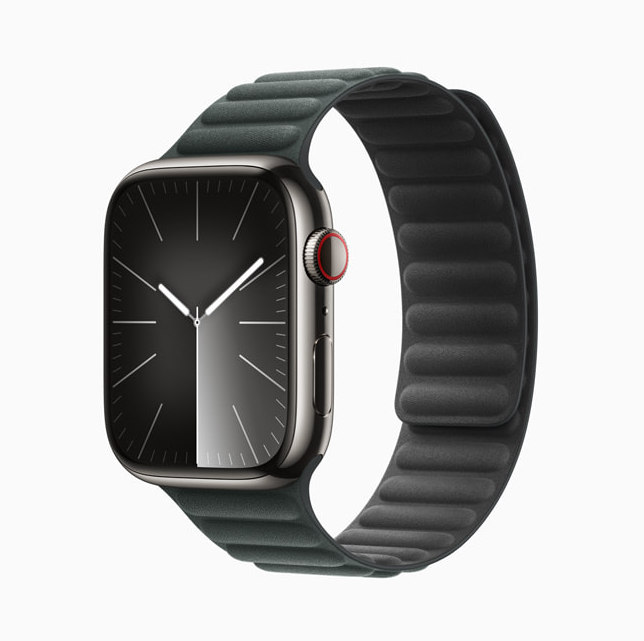
View the latest price and see whether the Apple Watch Series 9 fits your reminder setup.
At a Glance
- Strong reminder system with haptic alerts
- Seamless integration with iPhone ecosystem
- Customisable notifications and focus modes
- Useful for time awareness and task switching
- Premium price point compared to alternatives
View Apple Watch Series 9 on Amazon
Introduction
The Apple Watch Series 9 for ADHD Task Reminders is designed to act as a constant, wearable prompt system that helps reduce missed tasks and time blindness. For many people with ADHD, remembering what to do — and when — is often harder than actually doing the task.
If you’re comparing wearable reminder systems, it helps to look at how other smartwatches handle prompts and notifications. For example, the Samsung Galaxy Watch 6 for ADHD Task Reminders takes a more Android-focused, feature-rich approach, which can suit users who want deeper customisation and app integration.
This review focuses specifically on how the Apple Watch Series 9 performs as a reminder tool in real-life ADHD scenarios, not just its general smartwatch features.
Apple Watch Series 9 for ADHD Task Reminders: Key Features
The Apple Watch Series 9 includes several features that can directly support task reminders and daily structure.
- Customisable reminders with vibration alerts
- Siri voice input for quick task capture
- Focus modes to reduce notification overload
- Calendar and timer integration
- Third-party ADHD-friendly apps support
Who This Guide Is For
- Adults with ADHD who forget tasks throughout the day
- People who struggle with time awareness
- iPhone users looking for a wearable reminder system
- Anyone building a structured daily routine
Key Takeaways
- Best used as a reminder system, not a productivity app alone
- Haptic alerts are more effective than phone notifications
- Works well when paired with routines and scheduling
- Can reduce reliance on checking your phone constantly
How It Works
Setting up the Apple Watch Series 9 for ADHD Task Reminders is relatively straightforward, but the real value comes from how you use it consistently.
Step 1: Initial setup
You pair the watch with your iPhone and enable notifications for Reminders, Calendar, and any relevant apps. You can also set up Focus modes to control when notifications appear.
Step 2: Creating reminders
You can quickly add tasks using Siri, which is useful when your hands are full or you’re likely to forget something in the moment.
Step 3: During a session
When a reminder triggers, the watch vibrates on your wrist. This physical cue is often harder to ignore than a phone notification, especially if your phone is out of reach.
Step 4: Handling distractions
Instead of unlocking your phone and getting pulled into apps, you can quickly view the reminder on your wrist and return to what you were doing.
Step 5: Scheduling behaviour
Over time, setting recurring reminders (e.g. “start work”, “take a break”, “wind down”) helps build routine patterns, which reduces decision-making during the day.
Why It May Help (ADHD Context)
One of the biggest challenges with ADHD is inconsistent attention — not just distraction, but forgetting what you intended to do in the first place.
The Apple Watch Series 9 for ADHD Task Reminders works by externalising memory. Instead of relying on mental recall, the system prompts you at the right time.
It also reduces decision fatigue. Rather than constantly asking “what should I be doing now?”, you follow pre-set prompts.
Another key factor is environment control. Because the reminder is on your wrist, it bypasses the distraction-heavy environment of your phone.
I found that the vibration alerts were surprisingly effective — much harder to ignore than a silent phone notification buried under other alerts.
Research and behavioural insights from sources like ADDitude highlight how external reminders can support executive function challenges.
Real-World Use Cases
Working from home
Use reminders to structure your day into blocks. For example, start work, take breaks, and switch tasks without relying on memory.
Study sessions
Set timed reminders for focused study intervals and breaks. The watch helps you stay on track without checking your phone.
Deep work blocks
Combine Focus mode with scheduled reminders to create uninterrupted work periods with minimal distractions.
Evening routine
Use recurring reminders for winding down, preparing for the next day, or going to bed at a consistent time.
Feature Breakdown Table
| Feature | Details |
|---|---|
| Reminders | Custom alerts with vibration and sound |
| Voice Input | Siri allows quick task creation |
| Focus Modes | Reduces notification overload |
| App Support | Works with multiple productivity apps |
| Battery Life | Typically lasts a full day |
Focus Environment Fit
The Apple Watch Series 9 for ADHD Task Reminders fits best in environments where phone distraction is a problem. Instead of picking up your phone and getting sidetracked, you can rely on quick wrist-based prompts.
For a more streamlined alternative, the Fitbit Versa 4 for ADHD Task Reminders shows how a simpler smartwatch can support reminders without quite as much ecosystem complexity.
Real Use Review
In a typical day, the Apple Watch Series 9 for ADHD Task Reminders becomes a subtle but constant guide rather than something you actively think about.
Morning reminders help start the day, followed by structured prompts for work blocks and breaks. During busy periods, the watch keeps you anchored without requiring you to check your phone.
It works particularly well when tasks are pre-planned. On days where nothing is scheduled, the benefit drops significantly.
There are moments where it feels slightly restrictive, especially if too many reminders are set. It can create a sense of pressure rather than support.
Overall, it works best as part of a simple system, not an overcomplicated schedule.
Friction Points to Consider
- High cost compared to simpler alternatives
- Requires an iPhone for full functionality
- Can become overwhelming if overused
- Battery needs daily charging
Practical Reality Check
The Apple Watch Series 9 for ADHD Task Reminders is not a complete solution on its own. It won’t fix distraction or motivation issues without structure.
However, when used consistently, it can significantly reduce missed tasks and improve daily flow.
Think of it as a support tool rather than a fix — it works best when paired with simple routines and realistic expectations.
Buying Guide
When choosing the Apple Watch Series 9 for ADHD Task Reminders, consider how it fits into your existing setup.
Compatibility
Requires an iPhone to function properly.
Notification control
Customisable alerts help reduce overwhelm.
Ease of use
Simple interface, especially with voice input.
Routine fit
Works best when paired with structured daily habits.
Frequently Asked Questions
Is the Apple Watch Series 9 good for ADHD?
It can be helpful for reminders and time awareness, especially when used consistently as part of a routine.
Does it reduce phone distraction?
Yes, because you can check reminders without unlocking your phone.
Is it worth the price?
It depends on how much you rely on reminders. For heavy use, it can be worthwhile.
Can you use it without an iPhone?
No, it requires an iPhone for setup and full functionality.
Alternatives to Consider
If the Apple Watch Series 9 for ADHD Task Reminders feels too expensive or complex, there are other smartwatch options available.
Fitbit Versa 4 for ADHD Task Reminders offers a simpler, lower-friction reminder experience.
Amazfit Bip 5 for ADHD Task Reminders is a good fit if you want a more budget-friendly and stripped-back option.
Samsung Galaxy Watch 6 for ADHD Task Reminders works well if you want another premium smartwatch with stronger notification customisation.
Final Verdict
The Apple Watch Series 9 for ADHD Task Reminders is a strong option for people who struggle with remembering tasks and staying on track throughout the day.
It suits iPhone users who want a simple, wearable prompt system that reduces reliance on their phone.
However, it may not suit those looking for a low-cost solution or those who prefer minimal tech.
Used correctly, it can become a reliable support tool — but only when paired with consistent habits and realistic expectations.
For a broader look at how smartwatches and other tools can support daily routines, you can explore the Digital Productivity Tools for ADHD (UK Guide).