
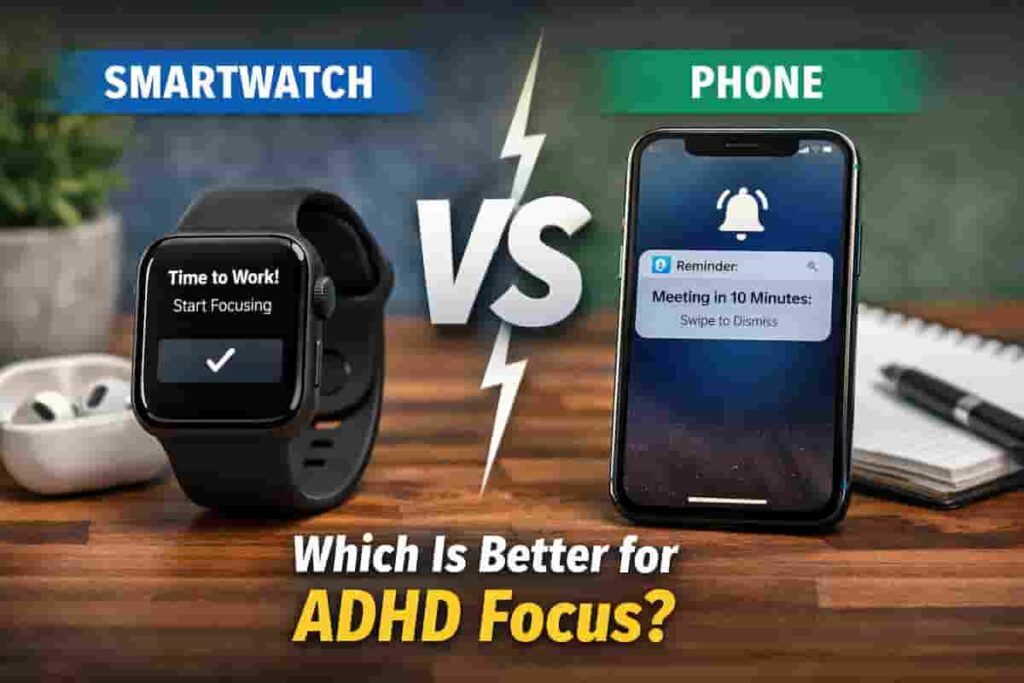
Smartwatch vs Phone Reminders: Which Is Better for ADHD Focus?: Quick Picks
- Smartwatches reduce distraction by keeping reminders off your phone screen
- Phones offer more control but come with higher distraction risk
- Simple vibration alerts can be more effective than loud notifications
- Wearable reminders are harder to ignore in busy environments
- Best results often come from combining both systems
Quick Picks by Situation
If you constantly get distracted when unlocking your phone, a smartwatch is usually the better option.
If you need detailed scheduling, recurring reminders, or complex planning, your phone will likely suit you better.
If you forget reminders entirely, a smartwatch’s vibration on your wrist can make a noticeable difference.
If you already rely heavily on your phone for organisation, it may be easier to optimise that instead of adding another device.
Introduction
When it comes to Smartwatch vs Phone Reminders: Which Is Better for ADHD Focus?, the answer isn’t as straightforward as it might seem. Both tools can help, but they work very differently in real life.
If you’ve ever picked up your phone to check a reminder and ended up scrolling for 15 minutes, you’re not alone. That’s one of the biggest challenges with phone-based reminders.
This is where smartwatches come in — they aim to reduce that friction by keeping reminders simple and harder to ignore. If you want a deeper look at smartwatch options, you can explore the full guide here: best smart watches for ADHD task reminders UK.
Who This Guide Is For
- People who forget tasks even with reminders set
- Anyone who gets distracted after unlocking their phone
- Those deciding between buying a smartwatch or sticking with their phone
- People trying to build a more reliable daily routine
Key Takeaways
- Smartwatches reduce distraction loops caused by phones
- Phones offer more flexibility but require stronger self-control
- Vibration-based reminders can feel more immediate and harder to ignore
- Consistency matters more than the device itself
- The best setup often comes from combining both tools
How These Products Were Evaluated
For this comparison, the focus was on real-world usability rather than technical specs.
Key factors included how easy reminders are to notice, how distracting the device becomes, how simple it is to set up routines, and how well each option fits into daily life.
I also considered how these tools feel during actual use — not just how they work on paper. For broader insight into ADHD attention and reminder behaviour, resources like ADDitude can be useful.
Quick Comparison Table
| Device | Best For | Strength | Limitation |
|---|---|---|---|
| Apple Watch Series 9 | iPhone users | Seamless reminders | Expensive |
| Samsung Galaxy Watch 6 | Android users | Strong integration | Battery life |
| Fitbit Versa 4 | Simple reminders | Easy to use | Limited apps |
| Amazfit Bip 5 | Budget option | Long battery life | Basic features |
| RUIMEN Smart Watch | Low-cost starter | Affordable | Less refined alerts |
Focus Environment Fit
One of the biggest differences in the Smartwatch vs Phone Reminders: Which Is Better for ADHD Focus? debate is how each device fits into your environment.
Phones tend to pull you into distractions, while smartwatches tend to interrupt you briefly and then let you return to what you were doing.
This difference sounds small, but it adds up over time. If you want to understand why wearable reminders often work better, this article explains it clearly: why smartwatch reminders work better than phone notifications for ADHD.
Focus Score Comparison Table
| Device | Distraction Risk | Reminder Visibility | Ease of Use |
|---|---|---|---|
| Apple Watch Series 9 | Low | High | High |
| Samsung Galaxy Watch 6 | Low | High | High |
| Fitbit Versa 4 | Low | Medium | Very High |
| Amazfit Bip 5 | Low | Medium | High |
| RUIMEN Smart Watch | Low | Low | Medium |
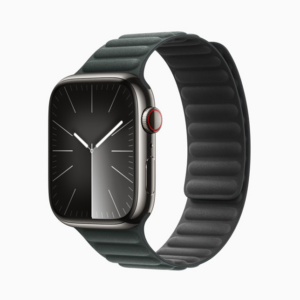
Apple Watch Series 9
Who It May Suit
Best for iPhone users who want seamless reminders without extra setup.
Why It May Help
Reminders appear instantly on your wrist, which makes them harder to miss. The integration with Apple’s ecosystem also keeps everything consistent.
Friction Points to Consider
- High cost
- Requires iPhone
- Daily charging needed
Practical Reality Check
I found this works best when reminders are kept simple. Too many notifications can still become overwhelming.
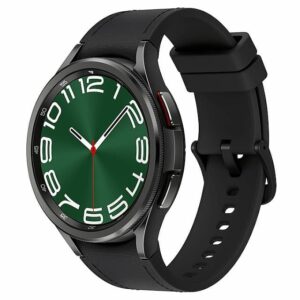
Samsung Galaxy Watch 6
Who It May Suit
Android users who want strong integration with their phone.
Why It May Help
It mirrors phone reminders but keeps them separate from distracting apps.
Friction Points to Consider
- Battery life can be shorter
- Requires setup time
- Can feel feature-heavy
Practical Reality Check
Works well once set up, but there’s a bit of a learning curve at the start.
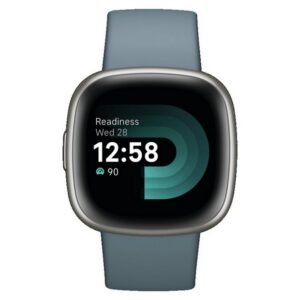
Fitbit Versa 4
Who It May Suit
People who want something simple and not overloaded with features.
Why It May Help
Clean, straightforward reminders without too much distraction.
Friction Points to Consider
- Limited app ecosystem
- Less customisation
- Basic interface
Practical Reality Check
This felt easier to stick with long term because it doesn’t overcomplicate things.
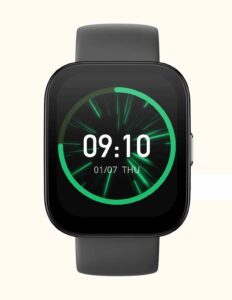
Amazfit Bip 5
Who It May Suit
Those looking for a budget-friendly smartwatch with decent functionality.
Why It May Help
Long battery life means fewer interruptions and more consistent use.
Friction Points to Consider
- Basic reminder system
- Less polished interface
- Limited integrations
Practical Reality Check
It does the basics well, which is often enough for reminders.
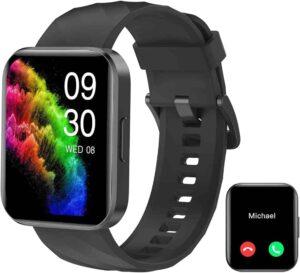
RUIMEN Smart Watch
Who It May Suit
Beginners who want to try smartwatch reminders without spending much.
Why It May Help
Provides basic wrist alerts that are harder to ignore than phone notifications.
Friction Points to Consider
- Less reliable notifications
- Build quality varies
- Limited features
Practical Reality Check
It’s a starting point rather than a long-term solution for most people.
Buying Guide: Choosing a Reminder Tool
When deciding in the Smartwatch vs Phone Reminders: Which Is Better for ADHD Focus? comparison, focus on how the tool fits your routine.
Compatibility: Make sure your smartwatch works smoothly with your phone.
Notification control: The ability to simplify alerts is often more important than having more features.
Battery life: A device that runs out of charge often becomes unreliable.
Ease of use: The simpler it is, the more likely you are to stick with it.
Frequently Asked Questions
Are smartwatch reminders better than phone reminders?
They can be, especially if your phone leads to distraction. The key advantage is reduced temptation.
Can I use both together?
Yes, and this often works best. Use your phone for planning and your smartwatch for execution.
Do smartwatches completely stop distraction?
No, but they can reduce it by removing the need to unlock your phone.
Are cheaper smartwatches effective?
They can be, but reliability and ease of use may vary.
Final Verdict
In the end, Smartwatch vs Phone Reminders: Which Is Better for ADHD Focus? comes down to how you behave around your devices.
If your phone regularly pulls you off track, a smartwatch is likely the better choice. If you need detailed control and structure, your phone still has a place.
For most people, the best setup isn’t choosing one — it’s using both in a way that reduces effort and makes staying on track feel easier.